

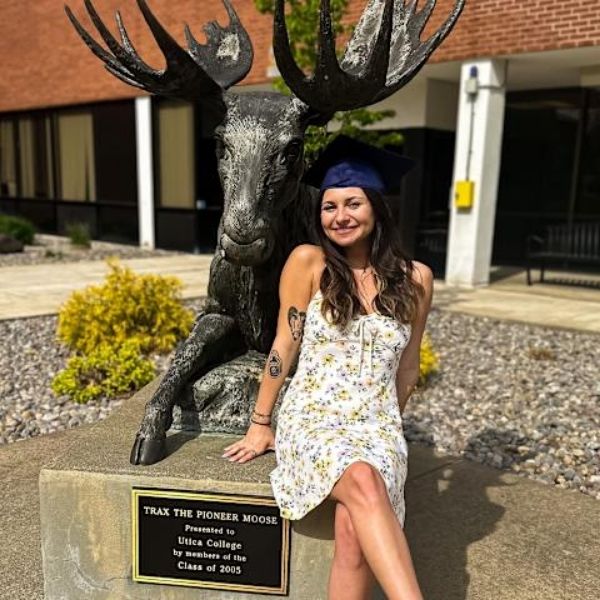
Mariana Tata, 26, experienced bloating for nearly a year and assumed it was related to her menstrual cycle or common gastrointestinal problems. With friends who have Crohn’s disease and ulcerative colitis, she believed she might be dealing with similar issues.
In April, Tata noticed blood in her stool — a common warning sign of colon cancer in younger patients. When the bleeding continued for a month, she contacted her primary care doctor. While hemorrhoids were suspected, her physician ordered further testing due to Tata’s history of anemia and worsening symptoms.
An abdominal scan revealed a 20-centimeter tumor on one of her ovaries. She was referred to a hospital in Syracuse, New York, where additional testing confirmed stage 4 colon cancer that had spread to her abdominal wall.
As part of her treatment, Tata had both ovaries and fallopian tubes removed, leaving her unable to have biological children. She said the diagnosis came as a shock.
“When you’re young, you don’t think that it’s cancer,” Tata said. “Colon cancer was not in my mind at all.”
Before her diagnosis, Tata had plans to buy a house and start a family with her boyfriend. Those plans changed as she faced surgery, chemotherapy, and mounting medical costs. She said paying for treatment forced her to rethink long-term goals, including homeownership.
Tata now splits her time between living with her boyfriend and staying at her parents’ home during chemotherapy treatments, where she receives additional care and support.
“My mom is the one who nurses me back to health, basically,” she said, crediting her family for helping her stay strong through treatment.
Although the days following chemotherapy are difficult, Tata said she often feels close to normal during off-treatment weeks. She has also found support by connecting with other colon cancer patients through advocacy groups and online communities.
Doctors say her condition is currently stable, with no progression of the cancer. Tata hopes to return to work in the coming months and gradually regain a sense of normalcy.
She now urges others, especially young people, to listen to their bodies and seek medical attention when something feels off.
“Go to the doctor, no matter how big or small it is,” Tata said. “What I thought was a small thing turned into a very big thing.”













Leave a Reply