

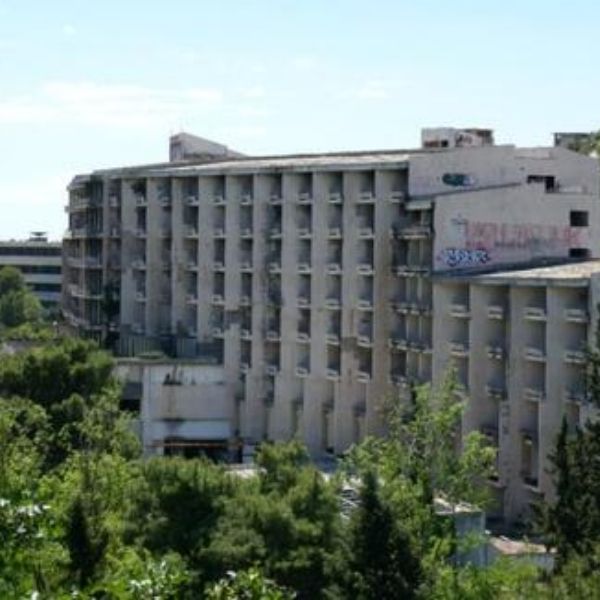
The collapse of a $2 billion luxury resort plan turned a marquee Ritz-branded vision into a warning about leverage, timing, and community risk. What was meant to serve as a high-end anchor for a growing region instead delivered a sudden shock, erasing roughly 2,000 jobs and leaving idle cranes towering over half-finished concrete. This breakdown shows how a project that once signaled market confidence unraveled so fast, and what that means for workers, lenders, and the next wave of mega-developments.
The $2 billion promise that became a warning sign
From the start, the $2 billion Ritz vision was marketed as a transformative bet on luxury tourism and real estate, the kind of project that signals a region’s arrival on the global stage. The plan bundled hotel rooms, branded residences, and upscale retail into a single destination, using the Ritz name as shorthand for stability and deep-pocketed backing. In Texas, the developer behind the $2B Ritz Carlton project leaned heavily on that image while assembling financing and approvals, positioning the resort as a long-term anchor rather than a speculative play.
That branding helped hide how fragile the capital structure really was. The Texas developer, identified in reporting by Timothy Malcolm, ultimately sought bankruptcy protection as cost pressures, delays, and lender tensions collided. A similar pattern appeared in Arizona, where the Ritz Carlton Paradise Valley resort was portrayed as nearly complete even as its owner, Five Star Development, entered restructuring. In both cases, the Ritz label failed to shield these projects from basic financial realities: when debt is high and timelines slip, even a $2 billion flagship can shift from prestige asset to distressed property almost overnight.
How one Texas filing rippled through the labor market
When the Texas side of the Ritz push faltered, the legal trigger was a bankruptcy petition, but the real impact landed on paychecks. The developer entered court protection with unfinished obligations ranging from unpaid contractors to local vendors who had prepared for years of steady work. The filing showed that some parts of the broader development ecosystem had already wrapped up, while others were left midstream with no certainty about payment.
For workers, the result was an abrupt halt. Crews pouring concrete, installing mechanical systems, or handling specialty finishes saw schedules disappear within days. Subcontractors who had hired extra staff to meet aggressive deadlines were forced into layoffs or furloughs. The estimate of roughly 2,000 jobs tied to the broader Ritz build captures only part of the impact, as each position supported families, nearby businesses, and local tax bases that had quietly counted on the project.
Ritz Carlton Paradise Valley and the Chapter 11 gamble
In Arizona, the Ritz Carlton Paradise Valley followed a different legal path but raised similar concerns about risk. Five Star Development, the company behind the resort, chose Chapter 11 protection in federal court to try to retain control of what it described as a nearly finished property. By filing for Chapter 11, the developer signaled confidence that the asset still held enough value to justify reorganization rather than liquidation.
That move came amid a high-stakes dispute with lender Madison Realty Capital over control and direction of the project. The conflict, outlined in later analysis of the resort’s long development, highlighted how delicate the balance can be between a sponsor’s vision and a lender’s tolerance for risk. By the time the Chapter 11 petition was filed, the resort’s future had become more than a construction issue; it was a test of whether bankruptcy law could be used to hold off a creditor while still delivering on a Ritz-branded promise to the community.
An 18-year saga of ambition, delay, and legal conflict
The Ritz Carlton Paradise Valley story did not begin with bankruptcy filings. It stretched across nearly two decades of shifting plans and market cycles. Over about 18 years, the project evolved from bold concept to case study in how mega-developments can linger as financing, entitlements, and design ambitions keep changing. The dispute between Five Star Development and Madison Realty Capital came to define the narrative, with each side blaming the other for delays and cost overruns.
As tensions grew, the site itself became a symbol of stalemate. Equipment sat idle, and partially completed structures were left exposed while lawyers exchanged filings. For residents and local officials, the drawn-out battle raised hard questions about how much leverage cities retain once they approve projects of this scale. An 18-year timeline is more than a detail; it shows how long communities can live with the fallout when a massive development goes off track.
Frozen cranes and 80 villas left unfinished
The clearest sign of the collapse is the skyline. Cranes that once moved steel and materials now stand still, a daily reminder that capital and labor have dried up. Coverage of the stalled project notes that work on 80 luxury villas stopped mid-construction. The phrase “$2B Ritz project’s collapse halts construction of 80 villas” reflects the scope of what is frozen, from foundations to framing to partially installed interiors.
Those 80 units were not just showpieces. They were revenue drivers built into sales forecasts, hotel occupancy models, and local tax projections. Their sudden limbo ripples through school planning, municipal budgets, and small businesses that expected an influx of affluent residents and visitors. When a project this large stops, the cranes mark more than unfinished buildings; they signal a broken economic promise visible for miles.
“2,000 jobs vanished”: the human cost behind the numbers
Behind the legal and construction jargon is a blunt statistic: “2,000 jobs vanished.” Coverage around the Ritz site emphasized that the collapse of the $2B Ritz project’s construction phase eliminated more than 2,000 roles tied directly to the build. In a widely shared segment, the line “$2B Ritz project’s collapse halts construction of 80 villas – 2,000+ jobs vanished” summed up the shock to the local workforce.
Those losses were deeply personal. Electricians expecting months of wiring work, carpenters specializing in high-end finishes, and hospitality trainees preparing for resort openings all saw opportunities disappear. Many had already endured pandemic-era instability and viewed the Ritz project as a rare source of multi-year security. Instead, they scrambled for smaller, shorter-term jobs, often at lower pay, while still carrying mortgages, car loans, and childcare costs set for a very different income reality.
What the collapse reveals about luxury real estate risk
Financially, the unraveling of the Ritz projects highlights how concentrated risk can be in the luxury sector. High-end developments depend on a narrow pool of affluent buyers and travelers and are typically financed with layered debt that assumes smooth execution. The Texas developer’s bankruptcy shows how quickly that structure can fail when delays meet rising costs and tighter credit.
In Arizona, the prolonged dispute between Five Star Development and Madison Realty Capital points to another weakness: when a single lender holds outsized influence, disagreements can stall progress for years. The 18-year arc of the Ritz Carlton Paradise Valley effort suggests that even top-tier brands are vulnerable to long-running deadlocks. For investors and policymakers, the takeaway is clear: luxury branding does not remove execution risk, and it can sometimes conceal it until problems become impossible to ignore.
Community fallout when a prestige project stalls
Communities often welcome Ritz-branded projects as shortcuts to global recognition, but the fallout from a stall can be severe. Local leaders in Texas and Arizona effectively backed these developments through zoning, infrastructure commitments, and public messaging that framed the resorts as inevitable. When the project hit a wall and construction on key elements like the villas stopped, those leaders were left explaining why promised jobs, amenities, and tax revenue never arrived. Idle cranes and fenced-off sites became familiar backdrops at public meetings.
There is also a psychological toll. Homeowners who paid premiums to live near a future Ritz resort now face uncertainty over whether they are next to a future landmark or a lasting symbol of overreach. Small businesses that opened to serve resort guests are reassessing their survival plans. The collapse is not just about a developer and a lender; it shows how a single high-profile failure can weaken trust in the entire development process.
What comes next for workers, lenders, and the Ritz brand
The road ahead is likely to be slow and complicated. In Texas, the bankruptcy process will decide whether a restructured developer, a new sponsor, or a lender-led group takes control of the site. In Arizona, Five Star Development’s Chapter 11 effort is playing out in public, with Madison Realty Capital and other stakeholders weighing whether to add capital, push for a sale, or accept losses in exchange for eventual completion. None of these paths can instantly restore the 2,000 jobs that vanished, but they will shape how many return over time.
For the Ritz brand, the stakes extend beyond finances to reputation. The Ritz name is associated with polished luxury, not half-finished structures and legal battles. Yet its role here is largely through licensing and management, not ownership, which complicates public perception. If new funding arrives and the resorts are completed, the story may shift toward resilience and long-term value. If cranes remain frozen and the 80 villas unfinished, the $2 billion collapse will stand as a reminder that even the most prestigious names cannot guarantee outcomes for workers, lenders, or the communities that place their hopes in them.











Leave a Reply