

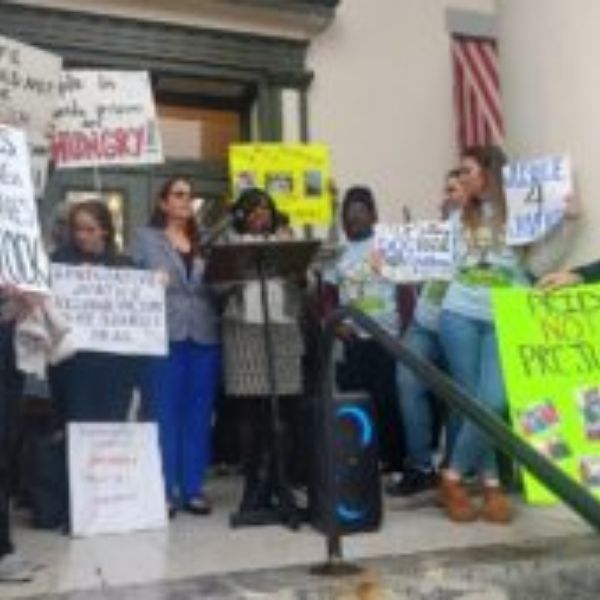
Florida Department of Corrections (FDC) Secretary Ricky Dixon is seeking more than $512 million from state lawmakers for the next fiscal year to maintain the state’s prison system. Speaking Wednesday to the Senate Appropriations Committee on Criminal and Civil Justice, Dixon acknowledged the request is “a staggering amount of money” and emphasized that it does not include salaries for correction officers, which he noted are among the lowest in the country.
“If I continue to do this job, we’re going to have to have the support we need, because we cannot keep going in the direction we’re going in,” Dixon said.
Florida currently houses over 89,000 inmates, a population that has grown by more than 10,000 since 2021 and is projected to rise by another 4,100 over the next three years. Dixon highlighted staffing challenges, explaining that the state is managing roughly the same number of staff it had when the population was 10,000 inmates smaller, creating strained staff-to-inmate ratios.
Some facilities employ officers as young as 19 with less than two weeks of experience supervising over 150 inmates, far higher than ratios in other states, which typically range from one officer per 35 to 50 inmates. Starting salaries for Florida correction officers begin at $22 per hour, or $45,760 annually, significantly lower than nearby Alabama, where correction officer trainees can earn up to $73,000 annually in maximum-security facilities.
Funding Requests and Needs
Dixon outlined specific funding requests:
-
$155 million for operational needs
-
$60 million for inmate health services
-
$56.4 million for new housing units
-
$45 million for drug costs
-
$22 million for critical security equipment
He reiterated that salary funding is separate, noting the importance of remaining competitive to retain staff.
Rising Overtime Costs
State records show the Department of Corrections spent $150 million on overtime last year. Sen. Clay Yarborough, R-Jacksonville, questioned Dixon about the high cost, and Dixon explained that staffing shortages caused by the addition of 10,000 inmates and reopening of previously closed dorms require double shifts, driving up overtime expenses.
Discussion on Reducing the Inmate Population
While the committee primarily focused on funding, Sen. Rosalind Osgood, D-Fort Lauderdale, suggested exploring options to reduce the inmate population, such as releasing elderly prisoners through “geriatric parole,” a practice allowed in 24 states. She argued that inmates who have served long sentences for non-violent crimes could be transitioned back into society more cost-effectively.
Dixon responded cautiously, saying, “I stay in my lane when it comes to who should be in our system and who shouldn’t be,” but acknowledged the discussion is “worthy of debate.”
Previous legislative attempts to make long-term prisoners parole-eligible in Florida did not receive committee hearings during the 2025 session, leaving these policy changes unaddressed.
This article has been carefully fact-checked by our editorial team to ensure accuracy and eliminate any misleading information. We are committed to maintaining the highest standards of integrity in our content.










Leave a Reply