

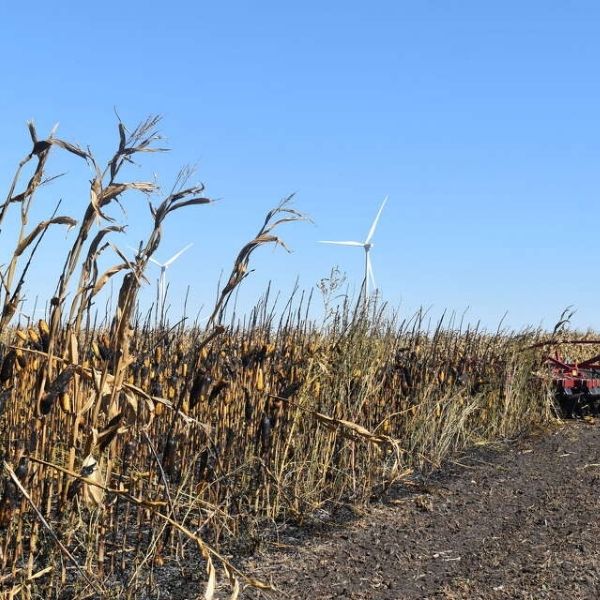
WEST-CENTRAL ILLINOIS — Persistent drought conditions are worsening across west-central Illinois, increasing the risk of farm fires and reducing crop yields.
According to an Oct. 9 report from the National Weather Service, the region’s lack of significant rainfall will cause the drought to “persist or worsen” in the coming weeks. Most of the area remains in moderate to severe drought, with little chance of relief before the end of October.
Farmers say the dry weather is not only hurting corn and soybean yields but also raising fears that hot machinery could ignite their fields.
David White, a Jacksonville farmer, knows that risk all too well. A stray ember from his corn head sparked a fire that burned three to four acres of his property earlier this month.
“I called the fire department, but I knew I had to do something first,” White said. With help from his neighbor, who brought a tractor disc, they quickly cut down surrounding stalks to stop the flames from spreading.
Standing beside the charred remains of his field, White said he’s taking extra precautions this season. “It’s been terribly dry,” he said. “We had about three-tenths of an inch the other night, and that’s all the rain we’ve had in two or three weeks.”
Meteorologist Nicole Albano confirmed that rainfall totals are well below normal and that warmer, drier conditions are expected to continue. “It’s not looking favorable for resolving the drought here by the end of the month,” she said.
State officials have been urging farmers to stay vigilant. Illinois Department of Agriculture Director Jerry Costello II warned that “a single spark can quickly ignite a field” during such dry conditions.
The department and the Illinois State Fire Marshal’s Office issued safety recommendations for farmers, including:
-
Inspect and clean equipment daily
-
Blow off debris and dust from combines
-
Lubricate and check machinery wiring
-
Harvest during cooler, less windy hours
-
Keep fire extinguishers in and outside cabs
-
Have a tractor with a disc nearby
-
Call 911 immediately if a fire breaks out
“Dry vegetation in fields and wildland areas creates high fuel loads that can ignite quickly and spread rapidly,” said State Fire Marshal Michele Pankow.
Despite the challenges, White said farmers are doing their best to cope. “Everybody knows we’re all in the same boat,” he said. “It’s just the luck of the draw whether or not you have a fire this year.”
This article has been carefully fact-checked by our editorial team to ensure accuracy and eliminate any misleading information. We are committed to maintaining the highest standards of integrity in our content.








Leave a Reply