

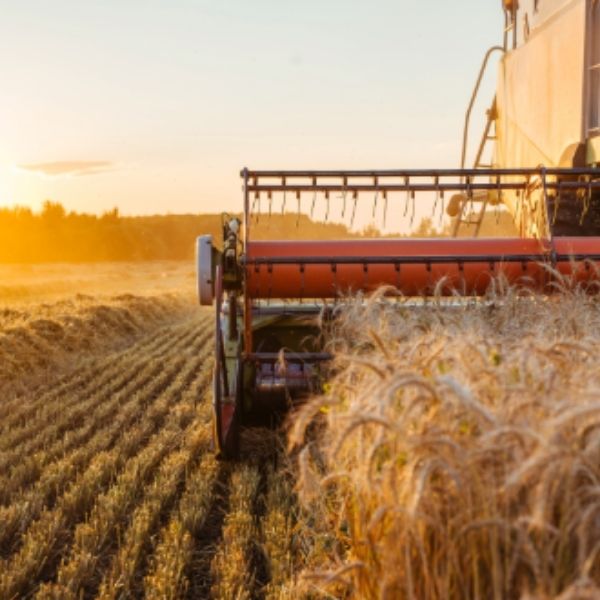
A high-stakes Supreme Court case on presidential tariff powers could reshape U.S. trade policy — with major consequences for Ohio’s farmers, particularly soybean producers already operating on thin margins.
In a new analysis titled “Is There a Legal Basis for ‘Liberation Day’ Tariffs?”, Ian Sheldon, professor and The Andersons Endowed Chair in Agricultural Marketing, Trade and Policy at Ohio State University’s College of Food, Agricultural, and Environmental Sciences (CFAES), explores the constitutional and economic stakes behind the case.
“The Court of International Trade ruled that imposition of the tariffs exceeded the authority delegated to the president by the International Emergency Economic Powers Act,” Sheldon explained. “That decision was affirmed on Aug. 29 by the Federal Circuit, emphasizing that IEEPA has been used for financial sanctions — not tariff-setting.”
The outcome could have sweeping effects on U.S. trade policy. Ohio’s soybean industry — ranked sixth nationally, with nearly 5 million acres harvested and 250 million bushels produced annually — faces significant risks if trade with key buyers like China remains disrupted.
“If the court finds the tariffs unlawful, questions will arise about refunding tariff revenues and what trade tools the administration might use next,” Sheldon said.
The issue will be front and center at the 2025 Agricultural Outlook and Policy Conference on Nov. 18 at the Nationwide & Ohio Farm Bureau 4-H Center in Columbus. Hosted by CFAES’s Department of Agricultural, Environmental, and Development Economics (AEDE), the event will feature sessions on trade, energy, labor, and farm margins.
“Whether it’s soybeans in Ohio or trade disputes in Washington, these issues are deeply connected,” Sheldon noted. “This case is about more than tariffs — it’s about the future of trade governance and the livelihood of American farmers.”
While tariffs remain in place for now, the Supreme Court will review the case Nov. 5. Sheldon expects ongoing uncertainty regardless of the outcome.
“China isn’t purchasing U.S. soybeans right now,” he said. “They’re using imports as leverage to push for lower tariffs, which is driving prices down and tightening farm margins.”
Even if tariffs are overturned, Sheldon warned that U.S. trade policy is unlikely to return to pre-2025 norms.
“The U.S. is shifting away from post-war trade norms,” he said. “We’ll likely see more aggressive use of trade laws — keeping global agricultural markets uncertain.”
Sheldon added that maintaining strong trade ties with Canada, Mexico, Taiwan, and other Asian markets will be essential as the U.S.-Mexico-Canada Agreement (USMCA) faces review in 2026.
This article has been carefully fact-checked by our editorial team to ensure accuracy and eliminate any misleading information. We are committed to maintaining the highest standards of integrity in our content.













Leave a Reply