

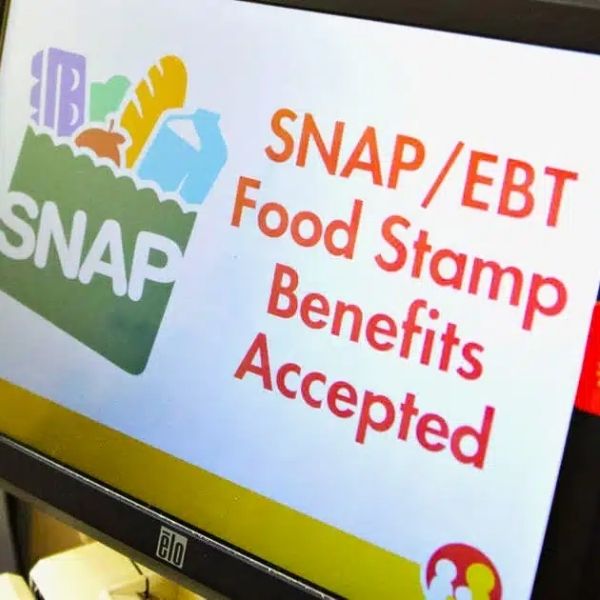
Two federal judges have ordered the Trump administration to keep funding SNAP benefits during the government shutdown, but when payments will resume remains uncertain.
What’s Happening
In separate rulings, the judges directed the U.S. Department of Agriculture (USDA) to use contingency funds to continue benefits, at least temporarily.
The decision offers temporary relief to 42 million SNAP recipients nationwide, including nearly 2 million in Illinois, and could allow Democrats to maintain pressure in ongoing negotiations to end the shutdown.
However, if the Justice Department successfully appeals the rulings—as it has with other cases—the stop-and-start of benefits could cause serious confusion for low-income Americans.
The Local Impact
Illinois Governor JB Pritzker recently signed an executive order allocating $20 million to food banks statewide to help offset the crisis, but officials warn it’s only a short-term fix.
Food banks and pantries are already struggling to meet rising demand, especially as thousands of unpaid federal workers seek assistance.
Background
Illinois is among 25 states suing the USDA, claiming it is illegally withholding SNAP funds. Roughly $6 billion in federal contingency money was originally set aside to cover benefits during a shutdown.
But the USDA insists those funds can’t be used for fiscal year 2026 benefits, arguing that “the appropriation for regular benefits no longer exists,” according to an Office of Management and Budget statement obtained by Axios.
By the Numbers
-
900,000 Cook County residents rely on SNAP for groceries.
-
Over 60% of SNAP participants are families with children.
-
The average benefit per person in 2024 was $192 per month.
-
About 1 in 5 Chicago-area households faces food insecurity, according to the Greater Chicago Food Depository (GCFD).
On the Ground
The GCFD and the Illinois Department of Human Services (IDHS) have published lists of local food pantries, and delivery services like DoorDash and Instacart are stepping in to assist families in need.
Expert Insight
“There’s a misconception that people on food assistance just buy junk food or soda,” said Bethany Doerfler, a clinical dietitian at Northwestern. “In reality, there are limits on what people can purchase, and these programs often combine nutrition education with food access.”
“When children don’t have enough to eat, it hurts their school performance,” she added. “Food insecurity doesn’t just mean hunger—it means exposure to stress, environmental toxins, and poorer learning outcomes.”
What Food Banks Are Saying
“For every meal provided by the Feeding America network of food banks, SNAP provides the equivalent of nine meals,” the Greater Chicago Food Depository said in a statement. “We’re proud of our impact and our ability to respond in times of crisis, but we cannot grow nine times in size.”
The organization said it will “do everything in our power to make sure food is available for anyone who visits a local pantry.”
How to Help
You can donate to the Greater Chicago Food Depository or check with local food pantries to see which items and resources are most needed.
This article has been carefully fact-checked by our editorial team to ensure accuracy and eliminate any misleading information. We are committed to maintaining the highest standards of integrity in our content.













Leave a Reply