

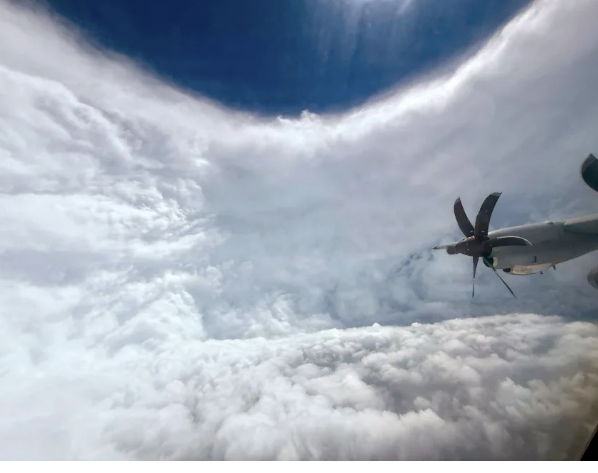
Tossed by violent winds and intense turbulence, NOAA’s Hurricane Hunters spent the past week flying into the eye of Hurricane Melissa — a storm of historic strength — to collect life-saving data. They flew around the clock because their mission is essential to public safety.
This time, however, they’ve done it without pay due to the ongoing government shutdown.
The Hurricane Hunters play a vital role in U.S. storm response. Their aircraft carry specialized equipment, including a tail-mounted Doppler radar that creates a virtual CT scan of the storm. This data is essential for accurate forecasts and real-time storm intensity measurements.
The information, including radar data, is immediately fed into computer models used to predict the hurricane’s path and strength.
But as Hurricane Melissa continued through the week, the crews operating these missions faced growing financial strain.
According to a NOAA employee familiar with the operation, crews flying the decades-old WP-3D aircraft have now missed two paychecks during the shutdown. The employee, who spoke on the condition of anonymity, said, “To be fully mentally present, especially in this environment, is hard when you might not be able to make ends meet. You’re dipping into savings to pay your mortgage, week to week or month to month.”
The flights through the former Category 5 storm were especially dangerous. One NOAA aircraft had to return to base for safety checks after exceeding its g-force limits from turbulence.
Videos from that flight show equipment falling from the ceiling and about 20 crew members being jolted against their harnesses, some cursing and laughing through the chaos.
After ground crews — also unpaid — conducted an inspection, the same aircraft took off again later that day to reenter the storm, the NOAA employee said.
Despite financial hardships, the crews have met every request made by the National Hurricane Center. The Center assigns flight paths and schedules to gather in-situ data that improves forecasts as much as possible.
“I think it’s notable that we have crews working around the clock to support this important mission,” the NOAA staffer said.
Each NOAA flight has been fully staffed with about 20 crew members.
Their work continued as Hurricane Melissa slammed into Jamaica, causing massive destruction and killing at least 19 people.
They also kept flying to support international partners, including missions on Thursday to help ensure Bermuda residents received accurate storm warnings.
NOAA spokesperson Kim Doster acknowledged their dedication and financial stress. “NOAA looks forward to a swift end to the crippling federal government shutdown, which is forcing essential workers and service members like our brave Hurricane Hunter pilots to go unpaid as they perform their mission-critical duties that protect the lives of Americans every day,” she told CNN.
The US Air Force Reserve’s 53rd Weather Reconnaissance Squadron, also known as the “Hurricane Hunters,” flew multiple missions into Melissa as well. However, their planes lack the sophisticated equipment on NOAA’s older aircraft. While NOAA flights focus on research and improving forecasts, the Air Force missions focus on storm intensity and movement.
Remarkably, one Air Force mission also had to turn back after encountering severe turbulence. CNN reached out to the Air Force squadron to ask about their pay status but has not received a response.
It’s rare for two flights to turn back in the same storm, highlighting Melissa’s immense power as it neared southwestern Jamaica. Melissa made landfall tied as the strongest Atlantic hurricane on record, with sustained winds of 185 mph.
Andy Hazelton, a hurricane researcher at NOAA’s hurricane research division at the University of Miami, said the NOAA flight that turned back because of turbulence was the roughest ride he has experienced in his seven years of hurricane research.
“You hit a big enough updraft and downdraft, you have to make sure the plane is okay,” said Hazelton, who is being paid through the university during the shutdown. “These crews are doing this all while not getting paid, so they deserve all the credit.”









Leave a Reply