

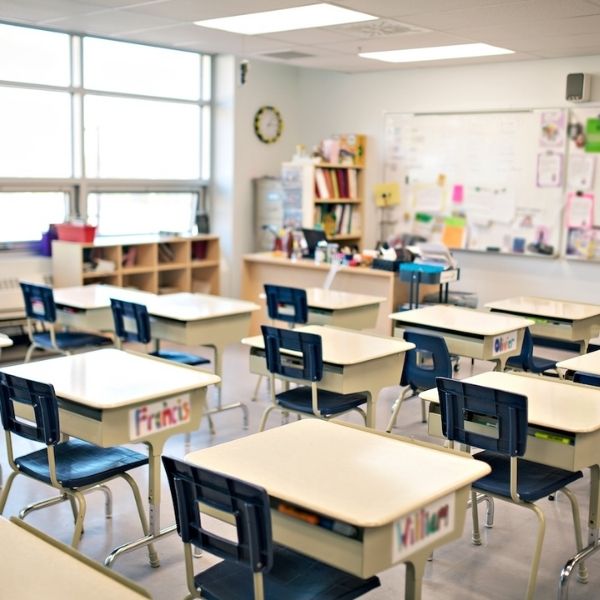
Democratic lawmakers in both chambers of the Florida Legislature have reintroduced a bill that would require schools to develop protocols for locating students with autism who wander from safe areas.
The proposal directs public schools to establish plans and designate trained staff to respond when students with autism “elope,” or leave supervised spaces without permission.
“This long-overdue measure would finally bring Florida in line with states that have already taken action on this issue,” Sen. Kristen Arrington, a Democrat from Kissimmee, said in a news release.
“By establishing clear, statewide guidelines, we can equip school districts with the tools and support they need to protect our most vulnerable children. It also gives parents confidence that, in an emergency, their child’s school will be prepared to respond quickly and effectively.”
The bill outlines a school elopement plan that includes immediately notifying the student’s parent, conducting a coordinated on-campus search, and contacting emergency services only when the student is believed—based on verified information or direct observation—to have left school grounds and be at risk of harm.
Under the legislation, School Staff Assistance for Emergencies teams would update the elopement plan each year, respond to all incidents, and train school employees on proper procedures. Schools would also be required to maintain a student-specific “quick reference guide” for children known to elope.
“As a society, we need to be more assertive in protecting the needs, safety, and dignity of the neurodiverse population. All special needs students in Florida deserve the same protection,” Monica Carretero said in the release. She is the mother of a child with autism who was once found at an outdoor basketball court after leaving his classroom.
The identical bills, HB 423 and SB 494, were filed by Rep. Anna Eskamani of Orlando and Sen. Arrington.
Nearly half of children with autism attempt to elope from safe environments, according to the National Autism Association, and some of these cases have resulted in accidental drownings.
“With nearly half of children with autism attempting to elope from safe environments, these safeguards are urgently needed,” Eskamani said in a news release. “Every student deserves to be safe at school, and every parent deserves peace of mind.”
Arrington filed the bill in both the 2024 and 2025 sessions, but neither version received a committee hearing.
Eskamani introduced the bill in 2023, 2024, and 2025. Her 2023 and 2025 versions passed one subcommittee before dying, while the 2024 bill did not receive a hearing.
Lawmakers last session focused heavily on issues facing Floridians with autism and their families. During the 2025 session, the first bill to pass the Senate expanded early detection and educational interventions for children with autism, a top priority for Senate President Ben Albritton, a Republican from Wauchula. That measure, SB 112, is now law.
Other bills from last session created a workforce credential for students with autism and required certain employers to cover benefits for children with autism.
The 2025 legislative session begins Jan. 13.
This article has been carefully fact-checked by our editorial team to ensure accuracy and eliminate any misleading information. We are committed to maintaining the highest standards of integrity in our content.











Leave a Reply