

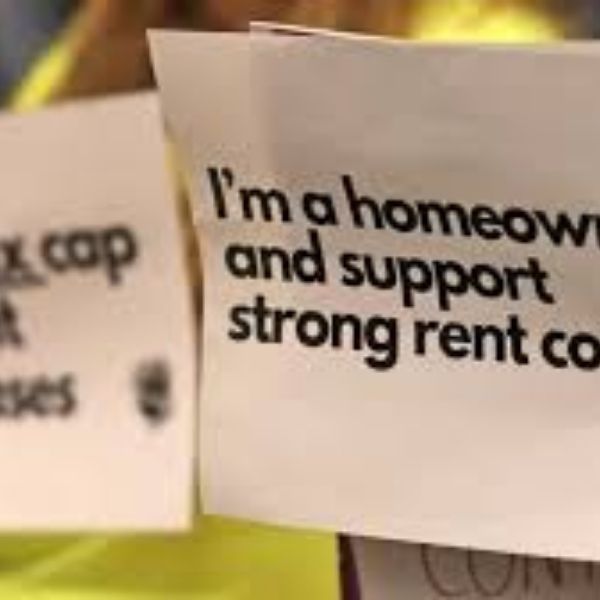
The campaign behind a proposed 2026 ballot measure to establish statewide rent control says it has cleared the highest signature-gathering hurdle, submitting what organizers call a “surplus” of voter support ahead of Wednesday’s local filing deadline.
Two years ago, a similar effort to place a local option rent control question on the 2024 ballot fell short due to signature requirements. Rent control supporters were optimistic Tuesday about their latest accomplishment.
Homes for All Massachusetts, the coalition driving the “Keep Massachusetts Home” initiative, reported collecting more than 124,000 raw signatures — well above the 74,574 certified signatures needed to advance the proposal.
The proposal would apply to all 351 cities and towns. By contrast, the state’s last rent control law, banned via the 1994 ballot, allowed municipalities to opt in. Under the new measure, annual rent increases for most units would be limited to either the annual Consumer Price Index increase or 5%, whichever is lower, using rents as of January 31, 2026, as the baseline.
Supporters say the policy is necessary to address a worsening housing crisis and protect renters from sudden, destabilizing price spikes. The measure would exempt owner-occupied buildings with four or fewer units and would not apply to new construction until buildings are at least 10 years old.
“Everywhere we went, we heard about how high rents are displacing workers and seniors,” said Rose Webster-Smith, director of Springfield No One Leaves. Volunteers reported widespread willingness from voters to sign.
Real estate industry groups, which unsuccessfully urged Attorney General Andrea Campbell to block the measure earlier this year, are preparing for a high-profile fight. Critics say rent control could suppress needed housing production and conflict with property owners’ constitutional rights.
“The risks of this ballot question for our economy cannot be overstated. It is not an opt-in: this question creates the most restrictive rent control program in the United States and forces it on every city and town across the Commonwealth. It will unquestionably make our housing crisis worse and reduce the supply of quality rental homes,” said the Greater Boston Real Estate Board, Massachusetts Association of Realtors, and NAIOP Massachusetts in a joint statement.
Local election officials must certify signatures before campaigns submit them to the secretary of state by December 3. The field of potential 2026 ballot questions is expected to narrow in the coming days as the certification process eliminates proposals that fell short.
This article has been carefully fact-checked by our editorial team to ensure accuracy and eliminate any misleading information. We are committed to maintaining the highest standards of integrity in our content.












Leave a Reply