

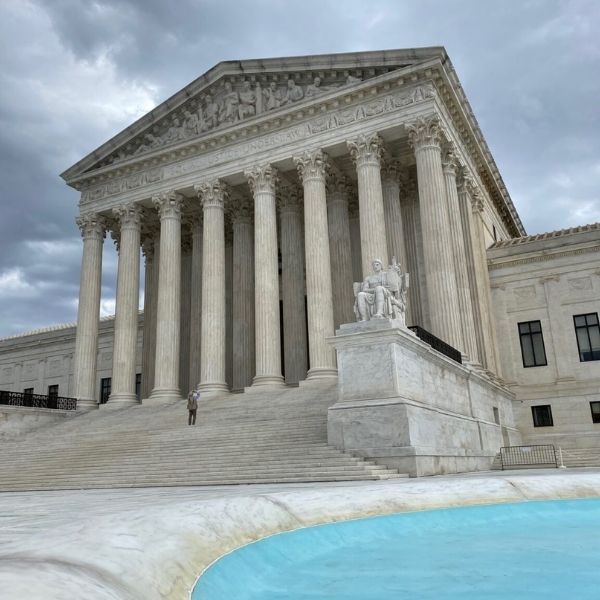
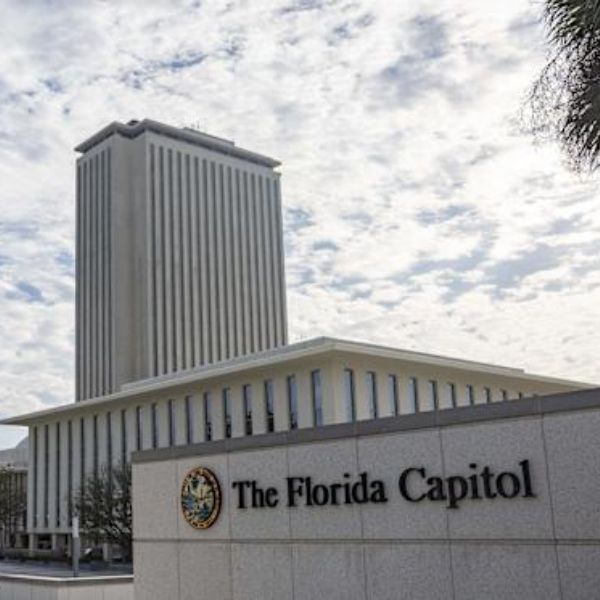
TALLAHASSEE — Attorneys for condemned inmate Frank Walls have made a last-ditch appeal to the U.S. Supreme Court to stop his scheduled Dec. 17 execution.
On Dec. 15, Walls’ legal team filed a petition and a motion seeking a stay of execution after both the Florida Supreme Court and a panel of the 11th U.S. Circuit Court of Appeals declined to intervene in recent days.
Walls, 58, was convicted in the July 22, 1987 murders of Edward Alger and Ann Peterson, who were fatally shot after Walls broke into their Okaloosa County home, according to court records. If carried out, the execution would mark Florida’s 19th lethal injection this year — the highest number in state history.
In filings before the U.S. Supreme Court, Walls’ attorneys argued that he should not be executed because he is intellectually disabled and that Florida courts failed to properly consider the issue. The U.S. Supreme Court has ruled that executing intellectually disabled individuals violates the Eighth Amendment’s prohibition against cruel and unusual punishment.
“The record is rich with evidence of Mr. Walls’ intellectual disability,” his attorneys wrote in the Dec. 15 petition. “Not only does Mr. Walls have qualifying IQ scores, but there is also evidence of subaverage intellectual functioning and deficits in adaptive behavior. This Court should not ignore this evidence.”
State attorneys disagreed. In a recent filing with the Florida Supreme Court, the office of Attorney General James Uthmeier argued that Walls does not meet the legal standard for intellectual disability.
“Walls is not now intellectually disabled and never was,” the state’s lawyers wrote.
The dispute stems from a series of court rulings tied to a 2014 U.S. Supreme Court decision in Hall v. Florida, which struck down Florida’s rigid IQ cutoff score of 70 for determining intellectual disability. The ruling said such a strict standard was unconstitutional.
Following that decision, the Florida Supreme Court ordered a hearing in 2016 to evaluate whether Walls was intellectually disabled. However, in 2020, the court reversed its position and ruled that Hall v. Florida should not apply retroactively to older cases like Walls’.
A circuit judge rejected Walls’ intellectual disability claim in 2021, and the Florida Supreme Court later denied his appeal based on the retroactivity ruling, court documents show.
Walls’ attorneys emphasized that he has repeatedly raised the issue, citing adult IQ scores of 72 and 74 along with evidence of impaired adaptive functioning.
“An amalgamation of wrongly decided state court precedent and convoluted procedural hurdles have thus far prevented a merits determination on whether Mr. Walls is categorically prohibited from being executed,” the petition stated.
The filing also argued that Florida’s handling of the case highlights the need for clarification that constitutional protections against executing intellectually disabled individuals apply at every stage of a defendant’s case.
As of the morning of Dec. 16, state attorneys had not filed a response, according to the U.S. Supreme Court’s online docket.
Gov. Ron DeSantis signed Walls’ death warrant on Nov. 18. If carried out, the execution would likely be Florida’s final one this year, surpassing the previous modern-era record of eight executions in 1984 and 2014. The modern era refers to the period since the death penalty was reinstated in 1976 following a 1972 U.S. Supreme Court ruling that temporarily halted executions nationwide.










Leave a Reply