

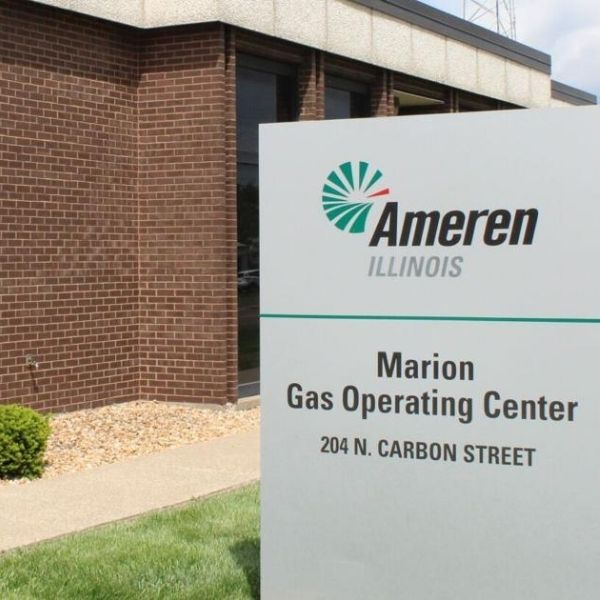
CHICAGO — The Illinois Commerce Commission approved smaller-than-requested electric rate increases for the state’s two largest utilities on Thursday after finding they exceeded their 2024 budgets.
Under the Illinois Public Utilities Act, utilities can ask the ICC to recover capital costs that exceed projected spending. However, the commission ruled that ComEd’s $268.5 million request and Ameren Illinois’ $59.6 million request were not fully proven to be “reasonable and prudent.”
As a result, the ICC cut $25.4 million from ComEd’s request and reduced Ameren’s by $11.2 million.
With the revised approval, typical ComEd residential customers in northern Illinois and Chicago will see their monthly electric bills rise by about $3.10, according to a company spokesperson. That is slightly lower than the $3.41 increase customers would have faced if the ICC had approved the full request.
Ameren’s full proposal would have raised monthly bills for typical residential customers in central and southern Illinois by about $0.39. With the reduced amount approved, the company expects electric delivery rates to remain largely unchanged.
The new rates will take effect in January, though exact bill impacts will vary based on usage and customer class.
Accountability emphasized
ICC Chairman Doug Scott said the rulings were meant to hold utilities accountable for their spending.
“The ICC’s decision today reiterates that unsupported departures from Ameren’s approved grid plan are inconsistent with the goals of the grid planning process,” Scott said, adding that utilities must prove any changes are reasonable and prudent to maintain the power system. He issued a similar statement regarding ComEd.
The authority to deny inefficient rate hikes comes from the Clean Energy Jobs Act, passed in 2021. Before that law, rates were set by a formula critics said lacked strong consumer protections.
ComEd disputed the decision, stating that the disallowed costs supported necessary system improvements and maintenance.
Consumer advocates welcomed the ruling. Sarah Moskowitz, executive director of the Citizens Utility Board, praised the ICC for “weeding out wasteful and inappropriate spending.”
CUB also pointed to recent rate increases for both utilities and argued that reconciliation requests should be eliminated altogether.
“If Ameren blows through its budget in a given year, customers shouldn’t have to pay the excess,” Moskowitz said in a statement earlier this month.
Last year, the ICC approved revised grid plans that included rate increases of $606 million for ComEd and $308.6 million for Ameren, spread through 2027.
In its latest decision, the commission rejected ComEd’s attempt to recover costs tied to a “mismanaged” customer care and billing rollout, finding those expenses were imprudently incurred.
Moskowitz agreed, saying ComEd customers should not have to pay for the utility’s “incompetence.”
The ICC also denied Ameren’s request to recover $10.7 million used to reimburse shareholders for contributions to the company’s employee retirement fund. Regulators said Ameren failed to prove shareholders actually made those contributions and noted the proposal conflicted with past commission rulings.
Going forward, both utilities must submit affordability data and cost-benefit analyses for grid plan projects when filing future reconciliation requests. The ICC said the requirement will help regulators and stakeholders better evaluate utility performance and spending.
This article has been carefully fact-checked by our editorial team to ensure accuracy and eliminate any misleading information. We are committed to maintaining the highest standards of integrity in our content.











Leave a Reply