

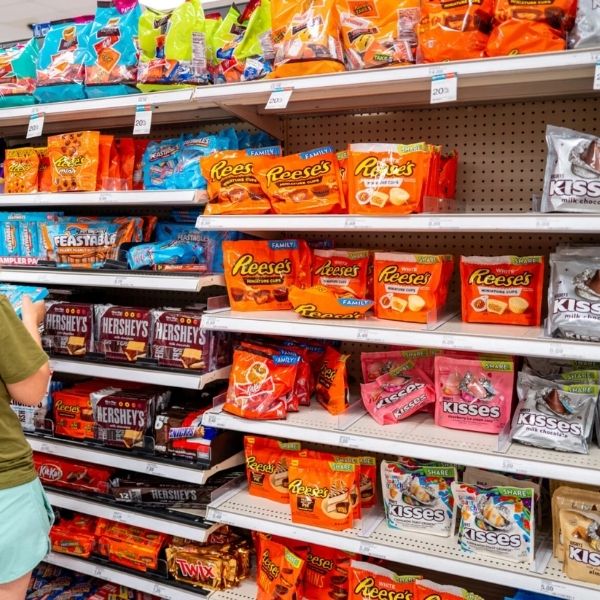
Starting Thursday, Americans in five states who rely on government assistance to buy groceries will face new limits on soda, candy and other foods they can purchase with those benefits.
Indiana, Iowa, Nebraska, Utah and West Virginia are the first of at least 18 states to receive waivers banning certain foods under the Supplemental Nutrition Assistance Program (SNAP).
The move is part of a broader push led by Health Secretary Robert F. Kennedy Jr. and Agriculture Secretary Brooke Rollins to encourage states to remove foods considered unhealthy from the nearly $100 billion federal program, long known as food stamps, which serves about 42 million Americans.
“We cannot continue a system that forces taxpayers to fund programs that make people sick and then pay a second time to treat the illnesses those very programs help create,” Kennedy said in a statement in December.
The effort aims to curb chronic conditions such as obesity and diabetes that are linked to sweetened beverages and other treats, a central goal of Kennedy’s Make America Healthy Again initiative.
However, retail industry and health policy experts warn that state SNAP programs, already strained by steep budget cuts, are not prepared for the complexity of these changes. They point to the lack of complete food lists and the technical challenges at checkout systems that vary by state and retailer. Research also remains mixed on whether restricting SNAP purchases actually improves diet quality or health outcomes.
The National Retail Federation predicted longer checkout lines and more customer complaints as SNAP recipients try to navigate which items are no longer allowed.
“It’s a disaster waiting to happen of people trying to buy food and being rejected,” said Kate Bauer, a nutrition science expert at the University of Michigan.
A report from the National Grocers Association and other trade groups estimated that implementing SNAP restrictions would cost U.S. retailers $1.6 billion upfront and another $759 million annually.
“Punishing SNAP recipients means we all get to pay more at the grocery store,” said Gina Plata-Nino, SNAP director for the anti-hunger advocacy group Food Research & Action Center.
These waivers mark a shift from decades of federal policy dating back to 1964 and reinforced by the Food and Nutrition Act of 2008, which allowed SNAP benefits to be used for “any food or food product intended for human consumption,” excluding alcohol, tobacco and ready-to-eat hot foods.
In the past, lawmakers floated proposals to bar SNAP spending on items like steak or so-called junk foods such as chips and ice cream. Those requests were denied after USDA research found the restrictions would be expensive, difficult to enforce and unlikely to change purchasing habits or reduce health problems.
Under the second Trump administration, states were encouraged and even incentivized to seek waivers, and many did.
“This isn’t the usual top-down, one-size-fits-all public health agenda,” Indiana Gov. Mike Braun said when announcing his state’s request last spring. “We’re focused on root causes, transparent information and real results.”
The five waivers taking effect Jan. 1 will impact about 1.4 million people. Utah and West Virginia will prohibit SNAP spending on soda and soft drinks. Nebraska will ban soda and energy drinks. Indiana will restrict soft drinks and candy. Iowa has adopted the most sweeping limits, barring SNAP use on taxable foods such as soda and candy, along with certain prepared foods.
“The items list does not provide enough specific information to prepare a SNAP participant to go to the grocery store,” Plata-Nino wrote in a blog post. “Many additional items — including certain prepared foods — will also be disallowed, even though they are not clearly identified in the notice to households.”
Marc Craig, 47, of Des Moines, said he has been living in his car since October and worries the new rules will make it harder to stretch the $298 he receives each month in SNAP benefits. He also fears increased stigma at the checkout counter.
“They treat people that get food stamps like we’re not people,” Craig said.
The Agriculture Department said the waivers will run for two years, with an option to extend them for three more. Each participating state must evaluate the impact of the changes.
Health experts caution that the restrictions overlook deeper issues affecting SNAP recipients’ health, said Anand Parekh, chief policy officer at the University of Michigan School of Public Health.
“This doesn’t solve the two fundamental problems, which is healthy food in this country is not affordable and unhealthy food is cheap and ubiquitous,” he said.
This article has been carefully fact-checked by our editorial team to ensure accuracy and eliminate any misleading information. We are committed to maintaining the highest standards of integrity in our content.











Leave a Reply