

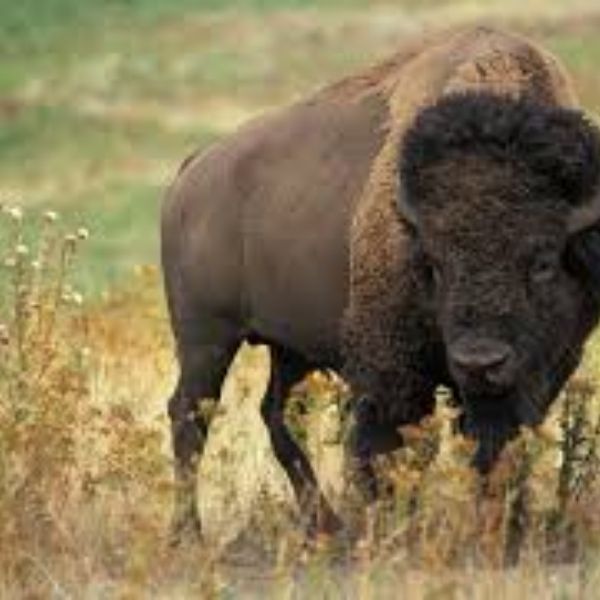
In Kane County, members of the Native American community gathered in December to welcome back a relative that had been missing for generations.
A small herd of bison has returned to Burlington Prairie, marking a long-awaited homecoming led by the American Indian Center. The effort honors Native stewardship of the land while reconnecting culture, history, and community.
“Sometimes we have stories that begin with back in the times when all things spoke,” said Robert Wapahi, a tribal elder with the Santee Sioux. “If nothing else, it’s the history lessons about what should be done to protect them.”
Just after sunrise, the prairie became a place of reflection and ceremony as the community came together to honor a return—not just to land, but to home.
“It’s different when you’re welcoming them back home. That’s their home, not mine,” Wapahi said.
Bundled against the cold, a caravan moved through snow to the steady rhythm of a drumbeat. Community members walked across the prairie to meet what they call their relatives.
Six bison stepped onto their ancestral land for the first time in more than a century.
“It’s really important and awesome to see another herd that is hitting the ground in a good way,” one man said.
More than 200 years ago, bison roamed freely across Illinois. As the industrial revolution transformed the landscape, the animals gradually disappeared from the state.
“In protecting them, we’re protecting ourselves, because again, they provided us with everything we ever needed,” Wapahi said.
After decades of careful conservation and land management, bison populations in the U.S. have rebounded enough to allow their return to parts of Illinois. Small herds are now being reintroduced across pockets of their historic North American range.
“It’s a great thing that they’re doing bringing them back,” said Lisa Burnell, who watched alongside her mother and son. “Their energy, I think, is just—it’s got such a powerful movement.”
For Burnell’s family, the moment felt both historic and deeply personal. Bison have carried stories, teachings, and responsibilities for centuries.
“Sitting Bull and Crazy Horse—we’ve always been talking about stories and the relationships that we’ve had with these animals,” Burnell said. “We have stories about animals, and so just having them here and being able to be so close to them.”
As the bison settle into their new surroundings, songs and prayers continue, echoing traditions that stretch far into the past.
“We’re just like the buffalo. I’m glad they came back home,” Wapahi said.
Wapahi has been tasked with sharing the meaning of the bison’s return and offering prayers over the land where they will live.
“I’m just honored to see a small return for them,” he said. “It’s kind of like speaking about your grandfather or your grandparents.”
The bison represent continuity and renewal, and in their return, a story once broken begins again.
“I hope you guys all get the medicine and the healing that they bring with, and you’ll learn from them,” one man said. “They’re strong and they’re resilient like we are.”
The American Indian Center will steward the herd in partnership with the Kane County Forest Preserves and an experienced herd manager. The animals will be cared for daily as they acclimate and grow.
Plans call for the bison to be released into a larger fenced prairie in the spring, where they will help restore native grasslands and support educational programs focused on land stewardship and prairie health.









Leave a Reply