

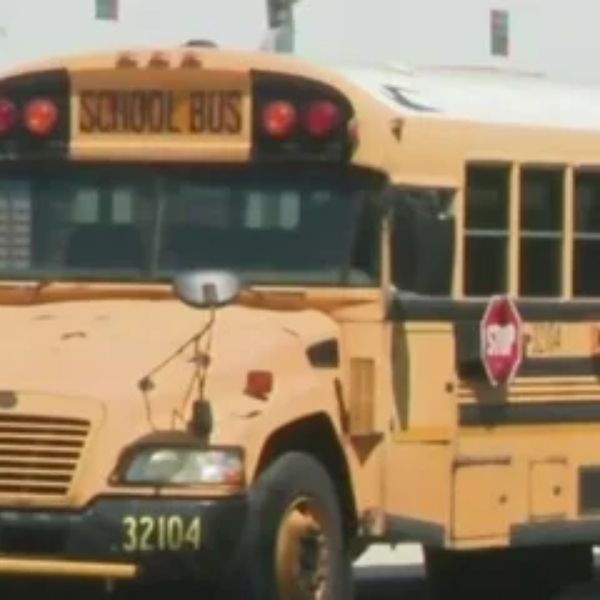
Six months after the Miami-Dade Sheriff’s Office suspended the school bus safety camera program—a joint effort between the school district, the sheriff’s office, and BusPatrol—the district is still searching for a way forward. Meanwhile, BusPatrol has enlisted two well-connected local lobbyists to help push the program.
The effort to salvage the program and address a backlog of thousands of contested citations dominated a Wednesday committee meeting. School board member Danny Espino proposed contracting with the Florida Division of Administrative Hearings, which uses administrative law judges to hear traffic citation challenges virtually—a model already used in Hillsborough County.
The program was approved by the school board in August 2023 as a “turn-key” solution by BusPatrol. Cameras would be installed on buses, and the company would coordinate with the sheriff to issue $225 citations to drivers who failed to stop for extended bus stop arms, while also allowing motorists to contest the tickets.
However, issues emerged within weeks of the May 2024 rollout. Reports from the Miami Herald and Tributary indicated drivers lacked a clear way to contest tickets. In April, the sheriff disclosed further problems, including incorrect citation numbers and amounts, prompting the program’s suspension.
A recent school district audit found that the program was improperly vetted and failed to establish effective communication between the agencies involved. The audit also noted the district did not review documented issues with BusPatrol’s programs in New York and Pennsylvania prior to the 2023 contract. During the meeting, Chief Operating Officer Luis Diaz disputed the claim, but audit director Elvira Sanchez confirmed the information was publicly available.
Because the contract would generate revenue, it bypassed the district’s usual bidding process. Under the deal, 70% of citation revenue went to BusPatrol, and 30% to the district. While no policies were violated, auditors recommended stronger vetting for revenue-generating contracts, which often escape scrutiny.
Since the program’s suspension, BusPatrol hired lobbyists David Custin and Tania Giselle Cruz-Gimenez, both with ties to local political campaigns. Campaign finance records show Espino paid $56,411 to Custin’s firm, while board member Mary Blanco paid $106,220. BusPatrol stated it remains committed to partnering with the district and sheriff to ensure due process for drivers.
Espino’s proposal, heading to a board vote on Oct. 8, would establish administrative hearings to process the 8,600 remaining contested citations and create a dedicated fund to track program revenue and costs. Board members, however, remain divided on covering the costs and the program’s future.
Steve Gallon said he supports Espino’s plan only to clear the backlog, not to revive the contract. Luisa Santos suggested waiting until July 2026, when tickets expire, noting hearings could cost the district at least $300,000. Monica Colucci argued the district should pay to resolve the backlog, excluding individual court fees.
Superintendent Jose Dotres cautioned against promising to cover administrative fees, saying, “We just have to be very cautious in saying that we are going to bear the cost.”
Espino, the program’s strongest supporter, expressed hope that the new administrative hearing process “could provide the sheriff comfort that there is a mechanism to contest” citations. Without the sheriff’s participation, the program cannot be reinstated.
This article has been carefully fact-checked by our editorial team to ensure accuracy and eliminate any misleading information. We are committed to maintaining the highest standards of integrity in our content.







Leave a Reply