

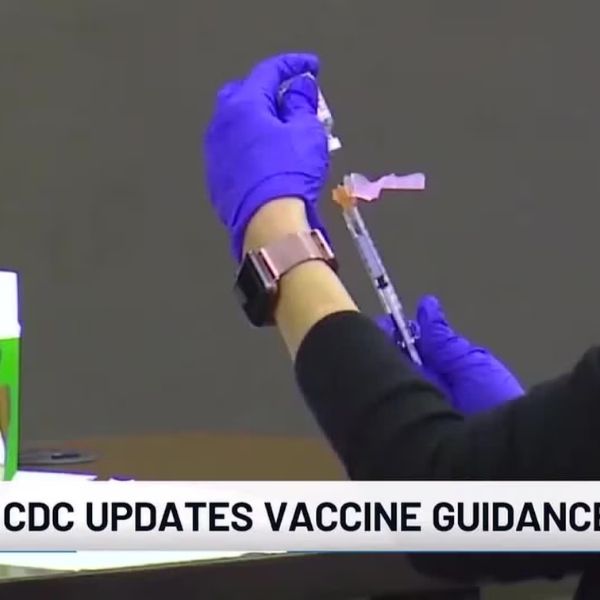
OMAHA, Neb. (WOWT) — The Centers for Disease Control and Prevention (CDC) has introduced new vaccine guidance that shifts the focus toward personal choice and collaboration with healthcare providers.
Under the updated recommendations, getting a COVID-19 vaccine is now considered an individual decision based on personal health history and risk factors. This approach, known as shared clinical decision-making, encourages people to consult with their doctor, nurse, or pharmacist to assess the risks and benefits before deciding whether to get vaccinated.
Pharmacist David Kohll of Kohll’s Pharmacy explained, “As a healthcare provider, we review the risks and benefits of the COVID vaccine with patients, as recommended by the CDC. I think it’s an excellent change because it removes barriers and helps offer more protection for everyone.”
The CDC also now recommends a standalone chickenpox vaccine for toddlers, replacing the previous combined MMRV shot.
According to Justin Frederick, deputy health director for the Douglas County Health Department, “The change was made to lower the risk of fever-related seizures while maintaining strong protection.”
A recent county survey revealed that only 13% of parents said they were willing to vaccinate their children — the lowest rate seen in years. Frederick added, “Hopefully, parents who were hesitant because of too many vaccines at once will be more open to this new approach, since it can all be done in one go.”
The CDC says the goal of these updates is to simplify vaccine schedules and build public trust.
Local health officials in Nebraska hope that improved communication between patients and providers will reduce vaccine hesitancy. “There unfortunately is a lot of misinformation out there about vaccines,” Frederick said. “But vaccines are among the most studied medical products in history.”
Kohll added, “It’s important to think of others. You never know when you might be around someone who’s really sick or immunocompromised.”
Both the updated COVID-19 and chickenpox vaccine guidelines are now in effect, and healthcare professionals across Nebraska are working to help families understand and adapt to the changes.
This article has been carefully fact-checked by our editorial team to ensure accuracy and eliminate any misleading information. We are committed to maintaining the highest standards of integrity in our content.














Leave a Reply