

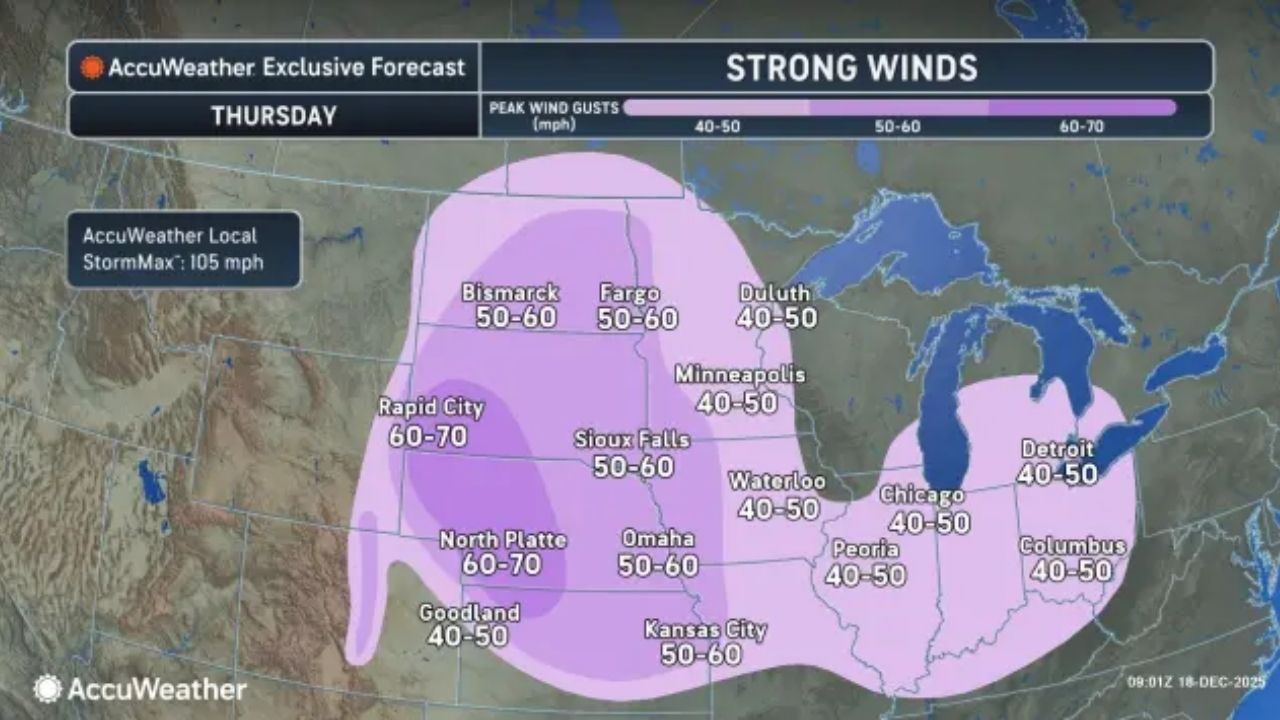
Howling winds reaching 80 and even 100 mph will blast areas from Montana to Colorado and the Dakotas from Thursday to Friday. Gusty gusts will also reach the Midwest and Northeast.
AccuWeather meteorologists warn that as an intense storm approaches the Canadian border, powerful winds of up to 100 mph will cause widespread power outages, property damage, and major travel hazards from the Pacific Northwest to the Rockies and northern and central portions of the Great Plains through Thursday.
According to PowerOutage.US, over 700,000 utility customers lost power in the middle of the day on Wednesday, ranging from Washington and Oregon to Montana and Colorado, as wind gusts reached triple digits in some locations.
Strong winds will stretch across a huge swath of the Rockies and Plains states Thursday, blowing down trees and power lines and even toppling high-profile vehicles. Wind gusts will surpass hurricane force (74 mph) in various places.
Trees may collapse down in damp areas. Sparks from downed live power lines can start rapid wildfires in dry areas. Some utility companies may temporarily shut off power to lessen the risk of wildfires.
The heaviest winds will initially come from the southwest and west, then shift to the northwest as the storm progresses. This will make cross-country highway travel more difficult.
High winds will have an impact on ski lift operations, potentially forcing shutdowns.
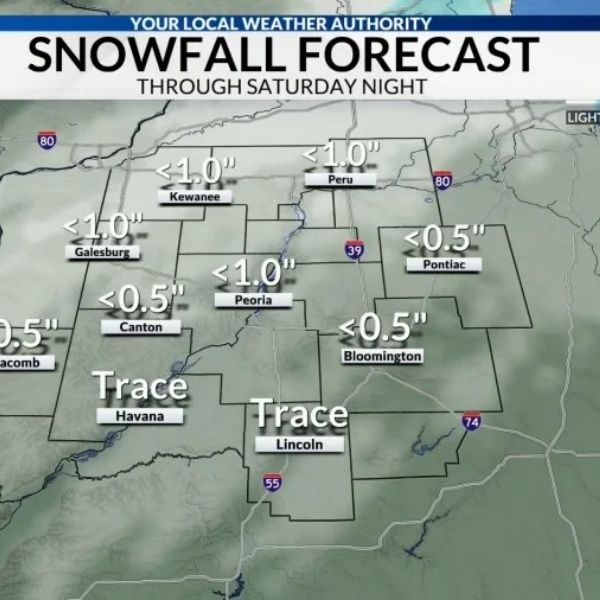
Local ground blizzard conditions will occasionally cause whiteouts as high winds combine with snow in parts of the northern Plains and Upper Midwest.
From Thursday until Friday evening, blustery winds will move east to the Midwest and then northeast.
While winds will be less powerful in these locations than in the Plains and inner West, they may still cause isolated power outages and flight delays.
A fresh storm approaching out of the Canadian Rockies on Thursday night and Friday will bring severe wind gusts from Montana to New Mexico. Only the hilly areas to the west of Denver will experience the most powerful wind gusts.
These powerful wind gusts have the potential to cause localized damage, power disruptions, and hazardous travel conditions.
Furthermore, the fire risk will continue high in eastern Colorado and New Mexico, where strong wind gusts combine with dry vegetation and low humidity.








Leave a Reply