

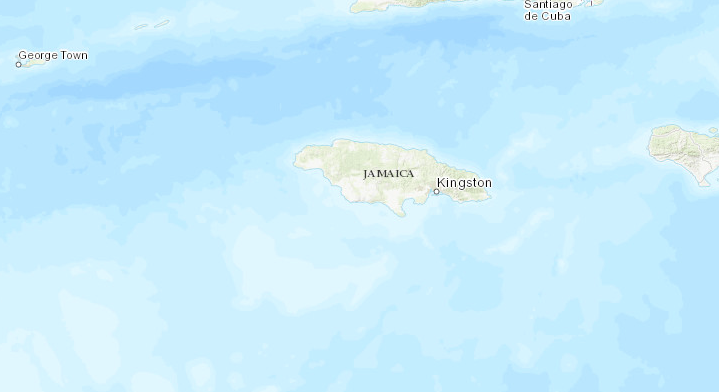
The road connecting Jamaica’s capital to the coastal town of Black River was once famous for its lush bamboo canopy, a natural tunnel glowing green under the sunlight.
Now, in the wake of Hurricane Melissa, those towering bamboo stalks lie splintered across the roadway. On Thursday, Jamaican soldiers used machetes to clear enough debris to partially reopen the route to Black River — a town the government has called the storm’s “ground zero.”
Hurricane Melissa came ashore just west of the town on Tuesday, destroying up to 90% of Black River’s buildings by ripping off roofs, snapping power lines, and even toppling concrete structures.
One of the strongest Atlantic hurricanes ever to hit land, Melissa has been linked to at least 19 deaths in Jamaica and 31 more in nearby Haiti.
In Black River’s wreckage, people desperately searched for help and supplies.
“People are hungry,” said Monique Powell, standing guard over food and household items she had gathered for herself and residents of Greenfield, one of several devastated communities near the town.
Helicopters circled isolated areas, dropping food while crews worked urgently to reopen blocked roads.
“You are not forgotten,” said Energy and Transport Minister Daryl Vaz.
Over 60% of Jamaica remains without electricity, and nearly half of its water systems are down.
In Black River, displaced and weary residents gathered at local shops and restaurants that were distributing whatever goods they had left. Many supplies were soaked or damaged after fierce winds tore through buildings and storm surges as high as 15 feet (5 meters) crashed into fragile structures.
What remained was a foul-smelling layer of mud, sand, and seawater coating wrecked cars and shattered buildings lining the town’s narrow streets.
“Everything is gone,” said Michelle Barnes as she and her 13-year-old daughter clutched their share of relief goods.
All along the debris-filled streets, men, women, and children moved quickly, carrying bags, boxes, or any container they could find — many balancing them on their heads.
Teenage boys and men transported bag after bag of supplies on bicycles and motorcycles under the sweltering sun.
“My roof is gone, and even the windows,” said Sadique Blair, seeking shade from the unrelenting heat.
A Historic Port in Ruins
Named after one of Jamaica’s longest rivers, Black River is one of the island’s oldest towns and the first to have electricity, according to the Jamaica National Heritage Trust.
It became the capital of St. Elizabeth parish in the late 1770s and was once a thriving seaport well into the 1900s. Over time, commercial activity shifted to nearby towns like Santa Cruz and Junction.
Now, some wonder whether this disaster could become an opportunity — a chance for Black River to rebuild and reclaim its historic status as a center of trade and commerce.
Looking tearfully at what was once her hair salon, Marcia Green said, “Everything has been destroyed. I had just bought new equipment and fixtures to move to a new location and restart my business. But now, nothing is left.”
For residents of southwestern Jamaica, the destruction feels twice as painful.
In July 2024, Hurricane Beryl’s outer bands struck Jamaica’s southern coast. Communities in the parishes of Clarendon, Manchester, and St. Elizabeth were among the hardest hit, and many were still rebuilding when Hurricane Melissa arrived.
A Deadly Trail
In the latest storm, police reported that several of Jamaica’s 19 deaths occurred in St. Elizabeth parish.
In Haiti, at least 31 people were confirmed dead and 21 reported missing, mostly in the southern region. More than 15,800 people remained in shelters.
Haiti’s Civil Protection Agency said Melissa killed at least 20 people — including 10 children — in Petit-Goâve, where more than 160 homes were damaged and 80 were destroyed.
Cuba reported no fatalities, thanks to the evacuation of more than 735,000 people in the eastern part of the country before the storm’s arrival early Wednesday. However, officials said roofs, power lines, fiber optic cables, and roads were severely damaged, cutting off communities and causing widespread agricultural losses, especially in banana, cassava, and coffee crops.
Several areas in Cuba still remain without electricity, internet, or phone service.
Hurricane Melissa made landfall in southwest Jamaica on Tuesday as a catastrophic Category 5 storm with sustained winds of 185 mph (295 kph). It tied the record for the strongest Atlantic hurricane to hit land in both wind speed and barometric pressure.








Leave a Reply