

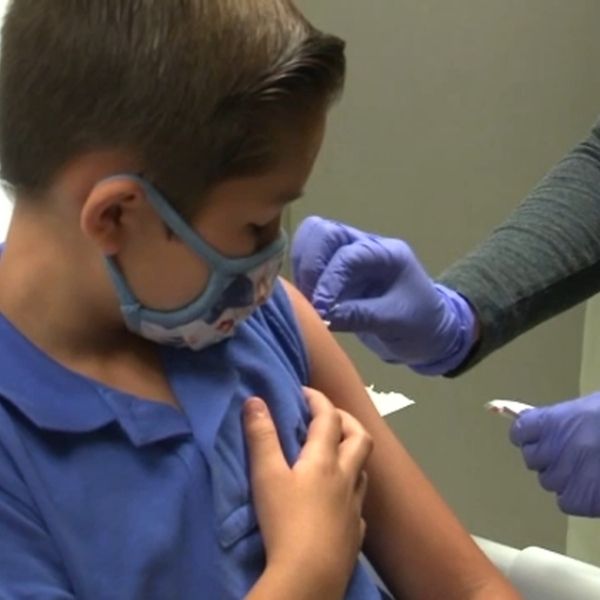
The Florida Department of Health on Wednesday moved closer to eliminating four childhood vaccine mandates, a step the agency can take without approval from the Legislature or the governor.
The proposal, discussed during a Friday workshop in Panama City Beach, marks the first concrete action in Florida Surgeon General Joseph Ladapo’s effort to eliminate all vaccine mandates in the state.
Florida law requires vaccinations for diseases such as polio, measles, and tetanus, and changing those rules would require legislative approval. However, for years the Department of Health has independently required four additional vaccines for school attendance: varicella, or chickenpox; hepatitis B; Haemophilus influenzae type b, or Hib; and pneumococcal conjugate, or PCV15/20.
At Friday’s meeting, a Department of Health panel heard mixed reactions from the public regarding the plan to remove those four requirements.
Supporters of the proposal voiced distrust of major pharmaceutical companies, saying vaccines are pushed for profit or that research data is misleading.
Preston Judd, a Republican candidate for the Florida House, said that if vaccines were truly essential, pharmaceutical companies should provide them at no cost.
“Would hospitals be jamming vaccines down our throats? Would they be treating our children as pincushions?” Judd said. “Break away from the sway of Big Pharma and think critically and honestly.”
The panel also heard from several doctors who warned that removing the mandates would reverse public health gains that have saved and protected children.
Some speakers said they remembered a time when childhood diseases caused widespread fear before vaccines became widely available.
Dr. Paul Robinson, a pediatrician with 40 years of experience, said he still remembers treating a 2-year-old left partially paralyzed by a Hib infection. After the Hib vaccine was introduced in the late 1980s, he said those cases disappeared from his practice.
“Let me be clear,” Robinson said from Tallahassee. “Vaccines eliminated one of the most devastating childhood infections of my career. This is not about parental choice, it’s about the public health and protecting the children that cannot be vaccinated.”
Jamie Schanbaum, a Brooklyn resident who spoke at the meeting, asked panel members for patience as she flipped through her notes, explaining she has amputated fingers.
Schanbaum said she understands “what it’s like to survive a preventable disease” after contracting meningitis in college in 2008. She said she spent seven months in the hospital watching her limbs “rotting and decaying before my eyes.”
“This is the reality of what it’s like to survive something like this,” she said.
Public health experts said the vaccines under review have helped nearly eliminate diseases that can be deadly or cause lifelong harm.
Dr. Joshua Sharfstein, a public health professor at Johns Hopkins University, said Hib and pneumococcal infections can lead to meningitis, which can kill children or cause severe brain damage and developmental delays.
Since widespread vaccination, Sharfstein said, those cases have essentially been “wiped out.”
“None of these are pathogens that have been eliminated from the face of the earth,” Sharfstein said. “These are all around. It’s more than just playing with matches, it’s setting a fire that’s going to harm children.”
The Department of Health also proposed expanding Florida’s vaccine opt-out form. Parents can already exempt children for religious reasons. Under the proposed rule, parents could cite a personally held belief to opt out.
Some speakers argued that expanding exemptions was not enough and said vaccines should not be required at all.
Laura Hartman, a former registered nurse, told the panel she became a minister in 2022 to help families obtain religious exemptions when other options were unavailable.
Florida’s childhood vaccination rates are already falling. The percentage of immunized kindergartners dropped from about 94 percent in 2020 to about 89 percent this year.
Dr. Paul Offit, director of the Vaccine Education Center at the Children’s Hospital of Philadelphia, said mandates increase vaccine use. He noted that when New York and California restricted exemptions, vaccination rates rose sharply.
Offit said public trust in vaccines has eroded and criticized Florida’s approach.
“In the midst of all this, our Florida surgeon general has decided we should make vaccines even less used,” he said. “It’s hard for me to understand how he thinks.”
Ladapo did not attend the meeting.
Once the Department of Health files its final rule, implementation could take three to four months, meaning the four vaccines could be removed from state requirements by spring.
Emma Spencer, a Department of Health division director, said public comments can be submitted to [email protected] through Dec. 22.
Ladapo announced his plan to eliminate all state vaccine mandates in September, comparing mandates to “slavery” and vowing to end “every last one of them.”
Public health experts nationwide have strongly opposed the plan, warning it could trigger a surge in preventable diseases.
The proposal has also drawn caution from President Donald Trump, who said in September, “you have vaccines that work, they just pure and simple work.”
“When you don’t have controversy at all, people should take it,” Trump said.
This article has been carefully fact-checked by our editorial team to ensure accuracy and eliminate any misleading information. We are committed to maintaining the highest standards of integrity in our content.






Leave a Reply