


The new rule requires faculty to publicly post syllabuses 45 days before classes begin
An upcoming Florida law will require professors to meet earlier syllabus deadlines and could expose their teaching materials to public scrutiny.
An upcoming Florida law will require professors to meet earlier syllabus deadlines and could expose their teaching materials to public scrutiny. Photo by Dylan Speicher | The Independent Florida Alligator
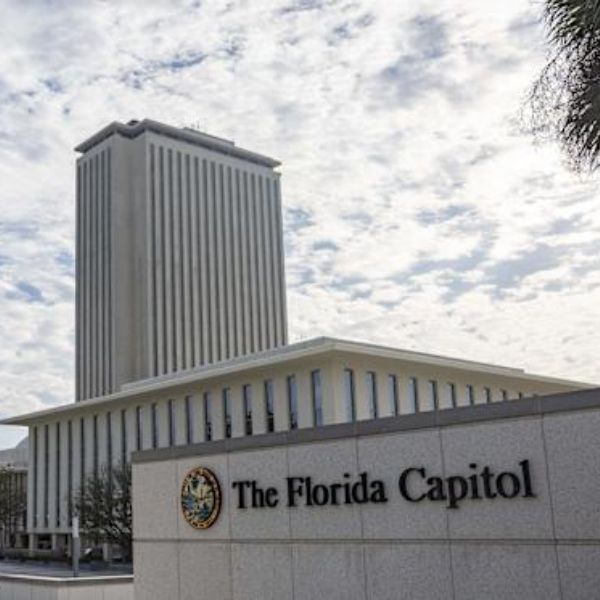
Faculty members across Florida’s public universities and state colleges are preparing to comply with a new regulation that requires them to publicly post their syllabuses and class materials 45 days before the semester begins.
However, uncertainty remains about when and how the rule will be enforced.
Although the law was approved two months ago and was originally scheduled to take effect during the Spring 2026 semester, the 45-day requirement will not be enforced until Summer 2026, according to an email the Florida Board of Governors sent to The Alligator on Jan. 8.
The board passed the policy in November 2025. It requires all faculty at Florida universities and colleges to post their syllabuses 45 days before the semester starts and keep them publicly available for at least five years.
The board said the regulation aims to give students greater transparency so they can better evaluate courses before registering. Critics, however, argue the rule is intended to suppress academic freedom by allowing the public to monitor classroom content.
The regulation requires syllabuses and textbooks to be searchable by the general education status of the course. Syllabuses must outline course content, required and recommended textbooks and materials, student expectations and methods of performance evaluation.
State colleges are also subject to the change, though implementation details remain unclear, similar to the university system. The Department of Education, which oversees Florida’s state colleges, did not respond to requests for comment regarding implementation timelines despite multiple emails and phone calls.
Even so, Santa Fe College plans to comply by the Fall semester, wrote Shawn Jenkins, the college’s communications manager, in a Jan. 6 email to The Alligator.
As faculty deal with inconsistent timelines and mixed guidance from universities about when syllabuses must be finalized and posted, many continue to raise concerns about the policy itself. Some say they are uncertain about how much flexibility they will have once enforcement begins.
Anna Peterson, a 62-year-old University of Florida religion professor, said she was initially confused by the policy. She believes students already have access to the necessary information.
Peterson said one of the most troubling aspects of the rule is the uncertainty around whether she will be able to adjust course content to reflect current events that are relevant to her class.
She pointed to a past course in which she reorganized material after the Paris bombings, allowing students to apply what they had learned to real-world events, a change she described as meaningful.
Enjoy what you’re reading? Get content from The Alligator delivered to your inbox
“One of the things we’re told is that what we’re teaching should be relevant and should help students prepare for professions and in graduate school, etc., so that requires some flexibility,” Peterson said.
Robert Cassanello, the state president of the United Faculty of Florida higher education union and an associate professor at the University of Central Florida, said he does not believe the legislation is about transparency.
“Lawmakers are not trying to create a standard of open access; they’re doing this because they understand very well that professors will feel targeted,” Cassanello said. “Professors will feel intimidated, and they will be more circumspect as a result of this.”
Cassanello said he has no objection to posting class materials online but believes the requirement will disrupt the teacher-student relationship. Discussions about course content should stay between students and professors, he said, and should not be shared publicly online.
In November, the United Faculty of Florida and the Florida Education Association challenged the policy through a petition seeking to invalidate it, arguing it represents an unjustified use of legislative authority. The FEA is now scheduling depositions and waiting to proceed once a hearing takes place.
Andrew Spar, president of the Florida Education Association, described the policy as an attempt to censor trained professors in higher education.
“We think this is a major overreach, and logistically, it doesn’t even make sense,” he said.
Spar added that the FEA believes the Board of Governors is exceeding its authority by implementing the policy. He said only the state legislature, not the board, has the power to pass a law of this magnitude.
Graduate students have also voiced concerns.
Cassandra Urbenz, a 25-year-old UF design and visual communications graduate student, serves as co-president of UF Graduate Assistants United.
Urbenz said she has already observed fear among graduate assistants because of the policy. Syllabuses often list the names of student assistants teaching the course along with faculty members. She said laws like this could lead to public backlash against student assistants once syllabuses are posted online.
“We have some students who are extremely concerned and erring on the side of caution,” she said.
While some faculty members say the lack of clarity has created anxiety and fear, others argue that the policy, despite its unclear rollout, will benefit students without limiting academic freedom.
Stan Kaye, a 68-year-old professor emeritus and former member of UF’s United Faculty of Florida chapter, led the graduate theater design program until retiring last year.
Kaye said he does not believe the policy restricts what instructors can teach. He also said the rule benefits students by improving transparency around course content.
He added that giving students the ability to compare faculty interests and course differences well in advance is one of the policy’s advantages.
“I don’t think it harms — I think it’s great,” he said. “Transparency.”










Leave a Reply