

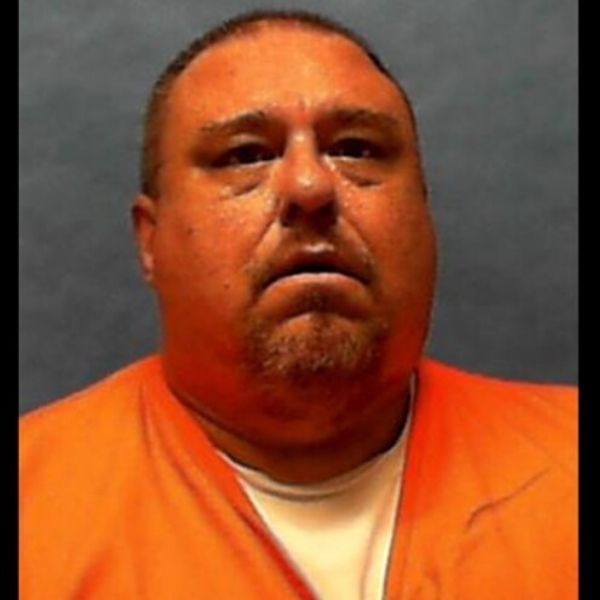
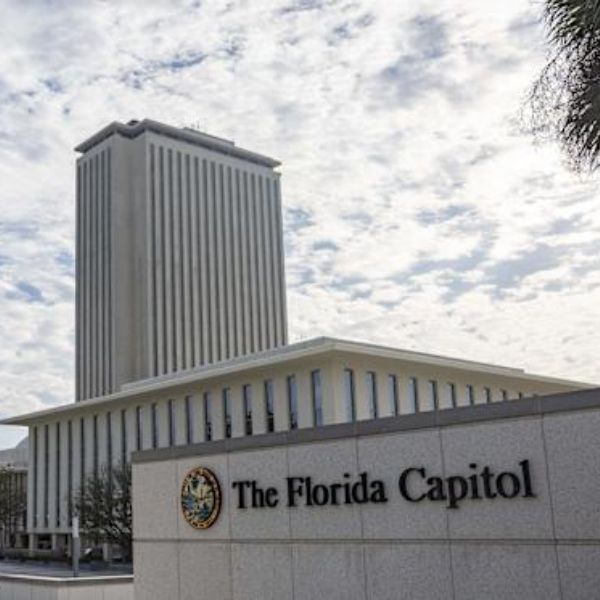
The Florida Supreme Court on Thursday declined to halt the scheduled execution of Frank Walls, rejecting arguments that he should be spared because he is intellectually disabled and was 19 years old when he killed two people in Okaloosa County.
At the same time, a separate case filed by Walls’ attorneys remained pending Thursday at the 11th U.S. Circuit Court of Appeals. That federal case raises different arguments aimed at stopping the execution.
Walls’ execution would be Florida’s 19th in 2025
Walls, 58, is scheduled to be executed Dec. 18 and would become a record 19th inmate put to death in Florida this year. He was convicted in the July 22, 1987, murders of Edward Alger and Ann Peterson, who died from gunshot wounds after Walls broke into their home, according to court records.
Thursday’s ruling upheld a decision by Okaloosa County Circuit Judge William Stone, who last week refused to block the execution.
Walls’ attorneys argued that carrying out the execution would violate the Eighth Amendment’s ban on cruel and unusual punishment because Walls is intellectually disabled. As part of their argument, they cited IQ scores of 72 and 74 recorded during his adulthood.
“The record is rich with evidence of Mr. Walls’ intellectual disability,” the attorneys wrote in a brief to the Supreme Court. “Not only does Mr. Walls have qualifying IQ scores, but there is also evidence of his subaverage functioning and issues with adaptive functioning. This Court should not ignore this evidence.”
Attorney General James Uthmeier’s office disputed those claims, arguing that Walls is not intellectually disabled. State attorneys said Walls scored an average IQ of 97 on three tests as a minor and that his adult average score of 73 does not meet the threshold for significant intellectual impairment.
“Walls is not now intellectually disabled and never was,” the state’s lawyers wrote.
In its 24-page opinion, the Supreme Court largely rejected Walls’ arguments on procedural grounds, noting that he previously raised similar claims in earlier appeals that were denied.
Walls’ attorneys also argued that he should not be executed because he was 19 at the time of the murders. In the 2005 case Roper v. Simmons, the U.S. Supreme Court ruled that executing individuals who committed crimes under the age of 18 violates the Eighth Amendment.
Walls’ legal team contended that the same protection should apply to young adults. However, Uthmeier’s office countered that the Florida Supreme Court has “repeatedly held that it lacks the authority to expand Roper beyond minors to include adults.”
The court said Walls’ argument was raised outside the allowed time limits. It added that “Walls marshals what he classified as new scientific evidence to support his claim, but we have previously rejected arguments that similar evidence constitutes newly discovered evidence sufficient to overcome procedural bars.”
Chief Justice Carlos Muñiz and Justices John Couriel, Jamie Grosshans, Renatha Francis, and Meredith Sasso joined the majority opinion. Justice Jorge Labarga dissented, and Justice Charles Canady was recused.
On Wednesday, Walls’ attorneys filed an emergency motion at the federal appeals court after U.S. District Judge Mark Walker declined to stop the execution.
The federal case focuses on Walls’ chronic health conditions and Florida’s lethal injection process, arguing that carrying out the execution would violate the constitutional ban on cruel and unusual punishment.









Leave a Reply