

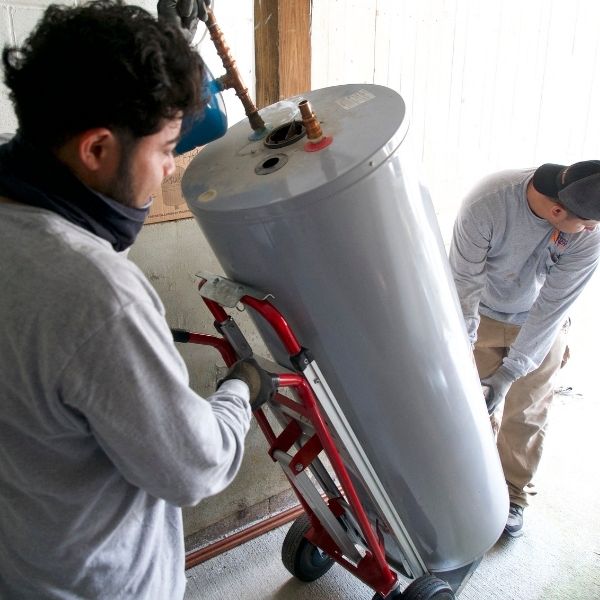
As federal incentives for home electrification disappear, an innovative Illinois law is helping families switch from gas to electric at no cost. The law allows utilities to meet energy-efficiency mandates by replacing gas appliances with modern electric ones — even though electricity use increases — because the overall shift reduces fossil fuel consumption and lowers household bills.
Jean Gay-Robinson, a Chicago retiree, said she “cried tears of joy” when ComEd replaced every gas-fired appliance in her home with electric versions for free. Her energy bills dropped, and she feels safer. “I don’t have to worry about gas blowing up or carbon monoxide,” she said.
She’s one of hundreds benefiting from a provision in the 2021 Climate and Equitable Jobs Act, which lets utilities count electrification toward required energy savings. The policy is rare nationwide but may become more important as federal incentives disappear under the Trump administration.
Modern electric appliances — including induction stoves, heat pumps, and electric dryers — are significantly more efficient than their gas counterparts. They cut fossil fuel use even in regions where the grid still depends on coal or gas, according to Nick Montoni of the North Carolina Clean Energy Technology Center. And as more renewable energy comes online, emissions tied to electric appliances fall even further. Indoors, the air is also much cleaner without a gas stove.
But upfront costs remain a major barrier — and those costs are rising. Federal tax credits for heat pumps and water heaters are now set to expire in December, seven years earlier than planned, and the future of the federally funded HEAR rebates is unclear. Some states launched their programs, but remaining funds were frozen earlier this year; Illinois has yet to receive its share.
That’s why state policies like Illinois’ are becoming crucial.
Illinois utilities commit to electrification
Illinois law requires ComEd to reduce electricity use annually by an amount equal to 2 percent of its sales. The 2021 clean-energy law lets ComEd meet part of those targets through electrification — 5 percent today, 10 percent starting next year, and 15 percent after 2029. A special formula converts the energy used by gas appliances into kilowatt-hours, allowing utilities to claim savings when customers switch from gas to electric.
ComEd covers the entire upfront cost of home electrification for households earning at or below 80 percent of the area median income. Since 2022, more than 700 homes have been upgraded. The utility also offers rebates for customers of any income.
ComEd must ensure electrification lowers a customer’s bills, and models each home to confirm the savings. “Nationally, I’m pretty sure this is one of the more ambitious approaches,” said Philip Roy, ComEd’s director of clean-energy solutions.
Gay-Robinson has already saved money and says her new system helps her face Chicago’s extreme weather. She even recommended the program to a friend who struggled through hot summers without air-conditioning — and believes the upgrade “may have saved her life.”
ComEd has committed to spend $162.3 million over the next four years on electrification and weatherization.
In Ameren territory — central and southern Illinois — the utility provides both gas and electric service but has taken a more limited approach. It plans to invest $5 million through 2029 to help rural customers move from propane to heat pumps.
A challenging road ahead
Electricity prices are rising across the PJM grid, making some electrification swaps less cost-effective. Since ComEd can only offer upgrades that lower bills, high power costs may disqualify some projects.
“We are in a moment where further iteration is needed,” Roy said, noting the impacts of tariffs on appliance prices and the looming expiration of federal tax credits.
Rooftop solar and batteries may help offset those rising costs. Illinois offers strong incentives for low-income households to install solar with little or no upfront spending.
“We see a lot of momentum,” Roy said. “Combining energy efficiency, electrification, solar, and battery storage, we have the tools. Now we need to fine-tune policies so we can accelerate the transition.”
This article has been carefully fact-checked by our editorial team to ensure accuracy and eliminate any misleading information. We are committed to maintaining the highest standards of integrity in our content.














Leave a Reply