

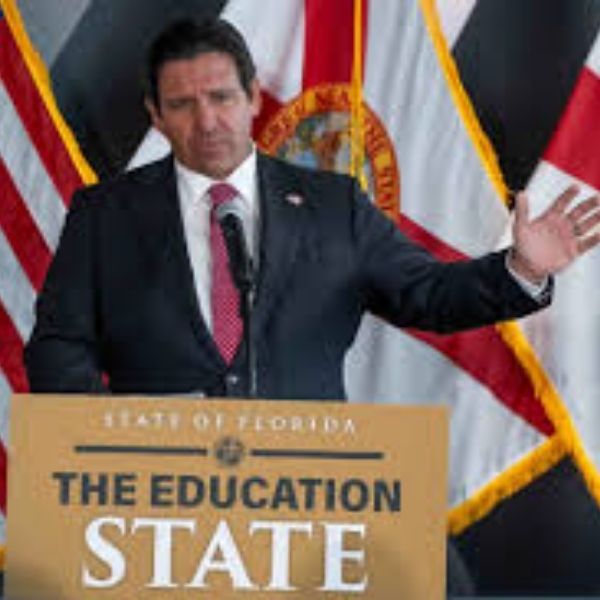
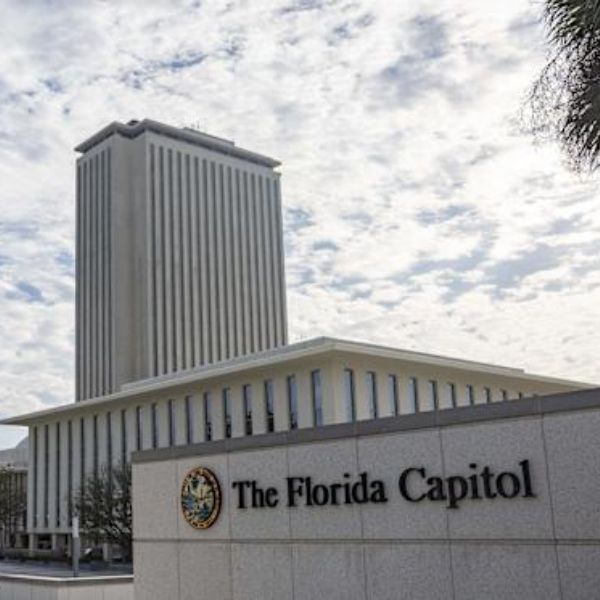
Florida lawmakers are back in Tallahassee with several proposals that could significantly reshape public education.
One bill would require teachers to swear a loyalty oath to the United States and the state of Florida. Another would repeal a law allowing charter schools to “co-locate” on underutilized district property. A third would increase oversight of voucher funding, which has grown sharply in recent years.
Teacher Loyalty Oath – HB 147
State Rep. Tom Fabricio, R-Miami Lakes, introduced legislation requiring prospective teachers to pledge to “support, protect, and defend the Constitution and the Government of the United States and the Constitution and Government of the State of Florida.”
The oath also requires teachers to commit to performing their duties professionally, independently, objectively, and nonpartisanly, upholding high standards of academic integrity and ethics, fostering respectful learning environments, and serving as positive role models “so help me God.”
Critics say the requirement to affirm “so help me God” could violate constitutional protections. The terms “nonpartisan” and “positive role model” are also expected to spark debate. The Florida Education Association (FEA) opposes HB 147, arguing that no one in a free society should be forced to pledge loyalty to the government as a condition of employment.
Repealing Charter School Co-Location Law – SB 424
State Sen. Darryl Ervin Rouson, D-St. Petersburg, filed legislation to repeal the law that allows state-designated “Schools of Hope” charter schools to operate on underutilized district property at no cost to the charter.
The expanded co-location law has drawn hundreds of applications from charter operators. In December, Palm Beach County School District rejected more than 40 requests, saying its property was not truly underutilized and allowing charters would create “material impracticality.”
The FEA calls SB 424 an effort to restore local control and remove an “unfunded mandate,” noting that co-location allows charter schools to claim public school space and resources for free.
Republican lawmakers generally support charter schools as alternatives to traditional public schools, which they argue underperform despite public funding. Critics say diverting public money to charters and private schools reduces funding for the majority of students in traditional public schools.
Voucher Funding Oversight – SB 318
State Sen. Don Gaetz, R-Pensacola, introduced legislation to improve oversight of the Family Empowerment Scholarship program. SB 318 would integrate voucher funding into the state funding formula, provide financial support to districts with changing enrollment, and ensure voucher funding reaches all eligible students.
The bill also moves payments from quarterly to monthly and requires families to verify continued eligibility before each payment.
The legislation follows a report from the state auditor general citing inadequate oversight, misplaced funds, poor student tracking, and cost overruns in the voucher program. The FEA called the bill “necessary, but not sufficient” to fix the program’s issues.
Voucher program legislation is likely to trigger intense debate in Tallahassee. Republicans, including Gov. Ron DeSantis, view vouchers as a way to give parents alternatives to traditional public schools, while Democrats and public school advocates see the program as siphoning funds from traditional education.










Leave a Reply