

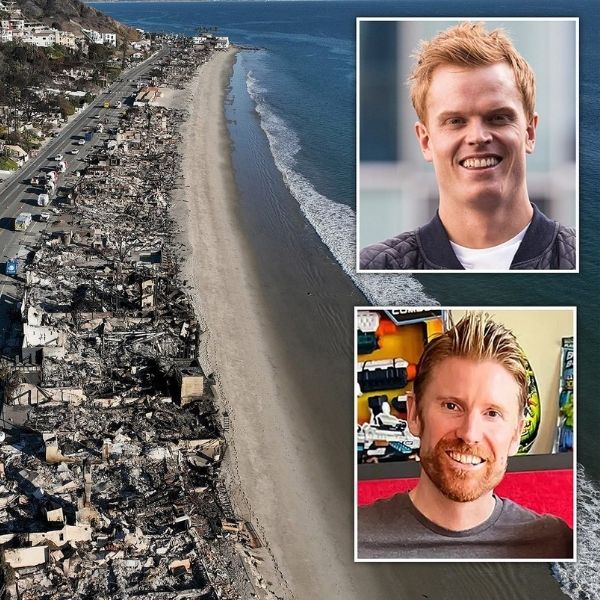
The charred beachfront of Malibu has become the latest flashpoint in California’s fight over wealth, rebuilding and who gets to call the coast home. After the Palisades Fire reduced a stretch of oceanfront properties to rubble, a pair of billionaire brothers quietly bought 16 of the burned-out lots, triggering fierce local backlash. Their promise of sleek prefab mansions and fast redevelopment now clashes with residents’ fears that disaster has opened the door to a new wave of speculative luxury construction.
At the center of the controversy are New Zealand toy tycoons Nick and Mat Mowbray, who made their fortune selling mass-market consumer goods and now want to reshape a fragile strip of shoreline in a high-tech vision of their own. I see their Malibu move as a test of how coastal communities respond when global capital arrives faster than local recovery, and whether neighborhoods scarred by fire can rebuild without losing their identity.
From wildfire ash to a billionaire land grab
The uproar begins with the scale and speed of the purchases. Nick and Mat Mowbray used their tech and consumer products company to acquire 16 wildfire-burned parcels along one of Malibu’s most coveted stretches of sand, transforming a disaster zone into a consolidated private portfolio almost overnight. Local reports describe how the brothers stepped in after homes were destroyed by the Palisades Fire, targeting lots whose owners were still grappling with loss and uncertainty. Residents quickly framed the buying spree as a land grab rather than a lifeline.
Tensions have been heightened by the fact that the buyers are foreign billionaires, not longtime locals, and that the transactions were carried out through a corporate entity rather than families rebuilding their homes. Coverage of the deals notes that the Mowbrays assembled the properties through their business interests, which are investing heavily in prefab construction. For neighbors who watched friends lose everything, the image of distant wealth scooping up burned blocks has been difficult to accept.
Who are Mat and Nick Mowbray?
To understand why the story resonates far beyond Malibu, it helps to look at the buyers themselves. Nick and Mat Mowbray are co-founders of Zuru, a New Zealand-based toy and consumer goods giant that turned low-cost, fast-moving products into a global empire. The brothers built their wealth on scale and efficiency, and they are now applying that same industrial mindset to housing, using a Zuru division to push into factory-built homes and real estate investment.
Reports on the Malibu purchases emphasize that the Zuru executives are not dabbling in a single beach house but testing a broader prefab strategy on one of the most visible coastlines in the United States. Their background as Kiwi entrepreneurs known for toys shapes how locals interpret the plan: less as a family retreat and more as industrialists trialing a scalable product in a vulnerable community. That perception colors every debate over what should rise from the ashes.
Sixteen scorched lots and a reshaped shoreline
The scope of the project is striking for a city where land is measured in scarce beachfront parcels rather than sprawling tracts. The brothers have acquired 16 scorched Malibu lots, once home to individual houses and now forming a continuous stretch under single ownership. Earlier coverage described how fires wiped out homes along this section of coast, leaving vacant pads that might otherwise have lingered on the market as owners weighed whether to rebuild or leave.
Instead, the Mowbrays moved fast, reportedly paying more than $65 million for the burned land and setting the stage for a coordinated rebuild. One account notes that the Kiwi billionaire brothers spent over $65 million on the scorched lots, routing the purchases through a real estate arm of their company. That concentration of ownership means the recovery will follow a unified vision, rather than a patchwork of individual choices, for better or worse, across a long and highly visible strip of coast.
The Palisades Fire and a community on edge
All of this unfolds against a backdrop of a community still reeling from the Palisades Fire and its companion blazes. The Eaton and Palisades fires tore through the area, destroying homes and forcing residents to confront the risks of living along the water. One vivid symbol of the damage was the Malibu mansion once owned by music mogul David Geffen, sold for $85 million in 2017 and later reported as destroyed by fire, underscoring how even the most fortified properties are vulnerable.
Longtime residents worry about Malibu’s future as repeated disasters collide with soaring land values and speculative interest. The loss of the Geffen-linked mansion, valued at $85 million, reinforced that fire does not discriminate between celebrity estates and modest homes. Against that emotional backdrop, the arrival of foreign billionaires buying multiple burned parcels feels to many like a second wave of displacement layered on top of the first.
Prefab luxury: solution or provocation?
The Mowbrays say they are not land banking but trying to transform how Malibu builds. Their plan centers on factory-built prefab homes produced in a dedicated facility and shipped to the coast for rapid assembly. In public comments, they have described luxury residences that will each look different despite being manufactured in a controlled environment, with production timelines of four to six weeks, far faster than traditional custom construction.
Supporters argue the approach could accelerate recovery, reduce on-site disruption and showcase more efficient building methods in a region desperate for resilient housing. One detailed account notes that the prefab homes are luxury, high-end properties that will all look different and can be produced in four to six weeks. Critics counter that for neighbors who value the eclectic, hand-built character of their street, a coordinated run of factory-made mansions feels less like innovation and more like a branded product imposed on the landscape.
“Revolutionizing” Malibu, one factory home at a time
In their own framing, the brothers are not just rebuilding but reimagining the coast. They have promised to revolutionize Malibu’s shoreline, presenting prefab construction as a way to deliver high design quickly while controlling quality in a factory in China before shipping components to California. In their view, the fire-scarred lots offer a blank slate to prove that industrialized construction can coexist with ultra-luxury expectations.
I see that rhetoric as both a sales pitch and a cultural provocation. When Nick and Mat Mowbray talk about revolutionizing Malibu, they implicitly challenge the slow, bespoke, architect-driven model long associated with the area. A widely shared video describes how the brothers plan to build homes in a Chinese factory and ship them to Malibu, a global supply chain that unsettles residents who see their town as a place, not a product. That tension between local identity and transnational development sits at the heart of the uproar.
City hall steps into a zoning minefield
Local officials now find themselves mediating a clash between property rights and community character. The Mowbrays have presented their plans to city leaders, outlining a phased buildout of 16 high-end prefab homes and pledging compliance with Malibu’s strict design and environmental rules. One account quotes their team saying the original idea was to build a single home for themselves, but public interest after the first purchase prompted them to expand the concept.
City leaders remain cautious, aware that approving a contiguous run of similar projects could set a precedent for post-fire rebuilding. Reporting on the review process notes that the brothers have pitched the homes as fully code-compliant, while longtime officials and activists push for close scrutiny of height, bulk, view corridors and coastal access. The debate is not only about legality, but whether the cumulative impact of 16 coordinated builds aligns with what residents believed they were protecting through tight zoning.
Residents push back against a billionaire beachhead
At street level, the reaction has been intense. Many Malibu residents say they were blindsided by how quickly burned lots were consolidated into a single foreign-owned portfolio, and community meetings have echoed with accusations of disaster capitalism. Coverage of the backlash captures neighbors arguing that the city should have explored ways to help original owners rebuild before allowing a corporate buyer to reshape the block.
One widely shared account describes Malibu residents outraged after foreign billionaire brothers bought 16 burned-out lots, with locals saying the deals felt like a takeover rather than a partnership. I hear in that anger a deeper fear about Malibu’s trajectory: if even fire-scarred neighborhoods are rapidly transformed into playgrounds for global wealth, remaining pockets of middle-class life may not survive the next disaster or market cycle.
Malibu’s future at the crossroads of climate and capital
Stepping back, the Mowbray episode reflects the collision of climate risk and global money on a narrow strip of sand. Malibu has long symbolized coastal privilege, but it is also a frontline community where wildfires, mudslides and rising seas are no longer abstract threats. The Palisades Fire sharpened that dual reality.
Into this fraught landscape step New Zealand billionaire brothers who see opportunity where others see loss. Reports describe how, after the Palisades Fire, the brothers purchased 16 beachfront lots in Malibu, with some accounts noting their company has pledged to engage with the community as part of the rollout. Whether those assurances can overcome the optics of a foreign billionaire beachhead will shape not only this project, but how other fire-scarred communities respond when the next wave of global capital arrives looking to build prefab dreams on burned ground.





Leave a Reply