

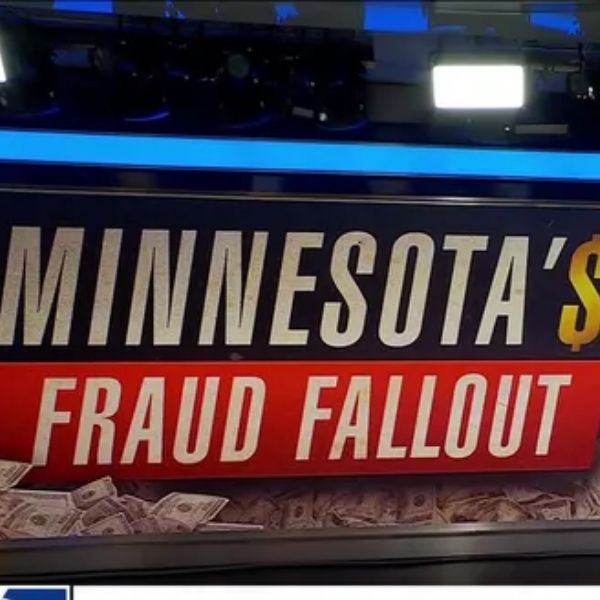
FBI Director Kash Patel says money was stolen “from hungry kids during a pandemic to fund mansions and luxury cars.”
Minnesota officials and the administration of Democratic Gov. Tim Walz are grappling with a widening fraud scandal involving state and federally funded programs, as investigators allege hundreds of millions of dollars—possibly nearing $1 billion—were siphoned off through coordinated schemes.
The allegations span multiple programs and have, at times, been tied to money laundering networks connected to the Twin Cities’ Somali community. Some funds were allegedly sent overseas, with concerns raised about potential links to extremist groups.
Walz acknowledged responsibility in December, saying, “This is on my watch. I am accountable for this and, more importantly, I am the one that will fix it.” He said his administration began stopping suspected fraudulent payments over the summer and referred several cases for prosecution.
However, Walz pushed back on claims from a federal prosecutor that as much as $9 billion in taxpayer money was lost, calling that figure “sensationalized” and invented by the White House, according to the Minnesota Reformer.
The Feeding Our Future case
By mid-December, the Justice Department announced that at least 78 people had been charged in the so-called “Feeding Our Future” scandal, named after a Somali-linked nonprofit accused of exploiting COVID-era child nutrition programs. Nearly 40 defendants had pleaded guilty.
Prosecutors allege that defendants falsified invoices, attendance records and meal distribution reports to access federal funds meant to feed low-income children during the pandemic. USDA waivers at the time loosened oversight requirements, which investigators say made the programs vulnerable to abuse.
FBI Director Kash Patel estimated that $250 million was stolen, calling the fraud “as shameless as it gets.” Court documents allege roughly 300 registered food distribution sites served little or no food while funneling money elsewhere.
Investigators and outside analysts, including the Manhattan Institute, have pointed to large sums of money being remitted abroad. The institute reported that $1.7 billion was sent from the U.S. to Somalia in 2023, a figure larger than Somalia’s national budget, though not all remittances are alleged to be fraudulent.
Expanding investigations
As the Feeding Our Future case unfolded, prosecutors uncovered additional schemes. U.S. Attorney Joseph Thompson said that every time investigators “look under a rock,” another multimillion-dollar fraud appears.
At least five people have been charged in connection with alleged fraud involving Minnesota’s Housing Stabilization Services program and an autism services program. Prosecutors allege companies billed Medicaid for services that were never provided.
In one case, two men from Philadelphia allegedly traveled to Minnesota after hearing the housing program was “easy money.” Authorities say they enrolled companies in the program and filed $3.5 million in fraudulent claims from out of state, a practice Thompson described as “fraud tourism.”
Daycare licensing under scrutiny
The latest focus involves dozens of allegedly fraudulent daycare providers, many operating in the Twin Cities. Authorities say some providers billed the state for childcare services that were never delivered.
The issue drew national attention after viral videos showed activists visiting daycare addresses that appeared vacant or non-operational. Minnesota’s Department of Children, Youth and Families said it takes all allegations seriously and regularly inspects licensed sites.
By October, Walz’s office had paused payments across 14 state programs deemed “high risk.” In December, the U.S. House Oversight Committee launched its own investigation, accusing the governor and his administration of failing to act sooner despite warning signs.
“The magnitude of the fraud cannot be overstated,” said FBI Minnesota Special Agent in Charge Alvin Winston Sr., calling the schemes a “profound betrayal of public trust.”
As investigations continue, state and federal officials say more charges are likely, with Minnesota’s oversight systems facing intense scrutiny amid growing concerns about accountability and safeguards for taxpayer-funded programs.




Leave a Reply