

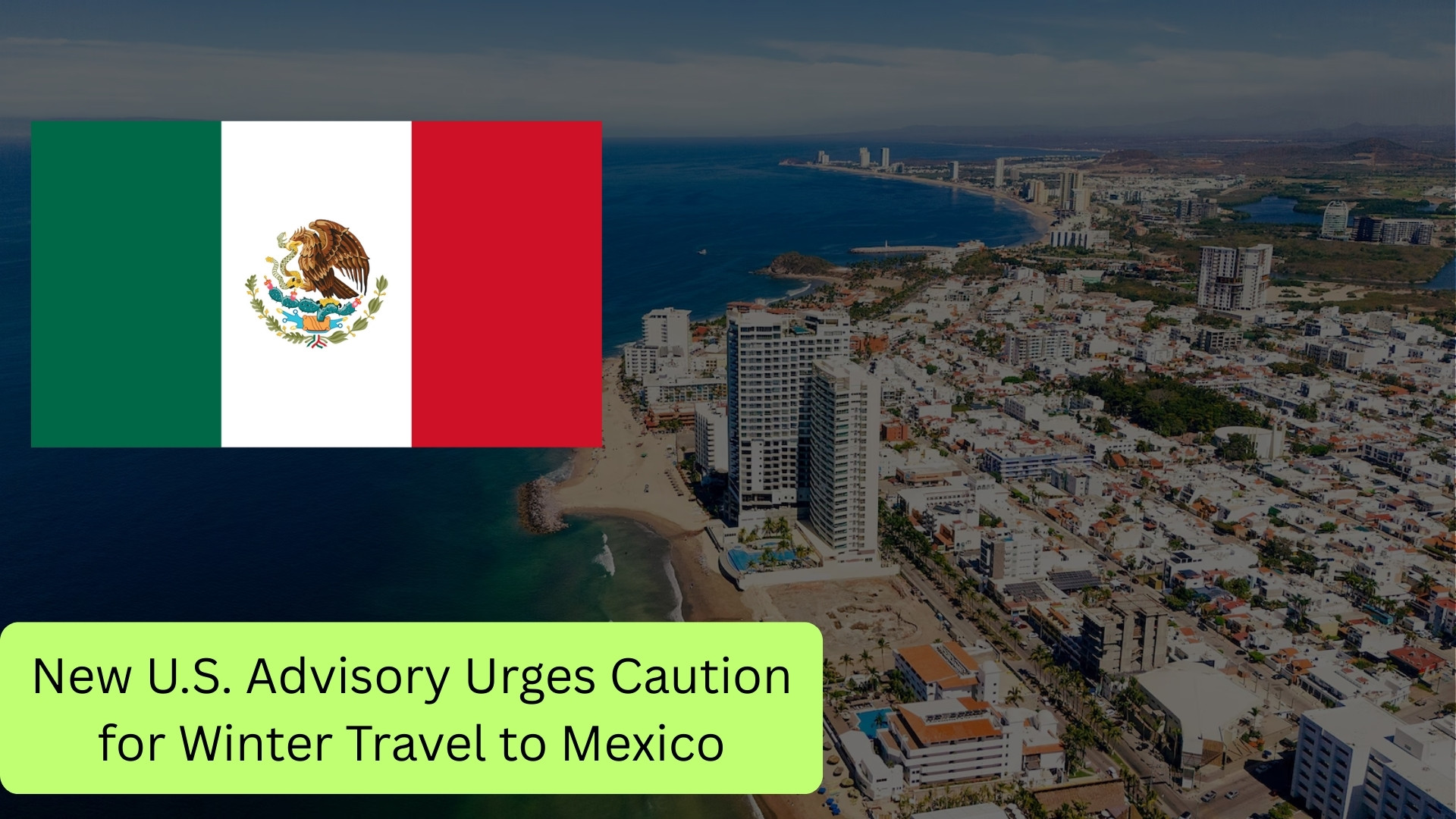
Mexico – Travel Smart – Be Informed: Each year, thousands of U.S. citizens visit Mexico during the winter season. Whether you are escaping from the cold for a warmer seasonal stay or visiting for a few days during the holiday season.
The U.S. Embassy in Mexico has issued new guidance for Americans traveling there this winter, urging them to stay aware of the country’s current Level 2 travel advisory and to “exercise increased caution” because of “terrorism, crime, and kidnapping.”
Earlier this month, the embassy shared tips to help travelers plan safer trips, including “following the entry and exit requirements, reviewing local laws, and other travel guidance from the U.S. embassy or consulate.”
The Level 2 advisory — posted on the official State Department travel website — covers 17 Mexican states and warns that violent crimes include “homicide, kidnapping, carjacking, and robbery.”
“There is a risk of terrorist violence, including terrorist attacks and other activity in Mexico,” it adds.
Seven states — Baja California, Chiapas, Chihuahua, Guanajuato, Jalisco, Morelos, and Sonora — carry a Level 3 advisory, urging Americans to “reconsider travel.” Six states — Colima, Guerrero, Michoacan, Sinaloa, Tamaulipas, and Zacatecas — have Level 4 advisories, meaning Americans should not travel there.
The State Department website reminds travelers that it has “limited ability to help in many parts of Mexico,” and notes that government employees cannot travel to certain high-risk regions.
Because of these security concerns, Americans are encouraged to “follow the same restrictions as U.S. government employees while traveling to Mexico.”
Emergency services remain limited or unavailable in remote or rural areas.
“If you encounter a road checkpoint, you should comply. Fleeing or ignoring instructions can lead to you being hurt or killed,” the State Department website warns.
Message to U.S. Citizens: Winter Season (Snowbird) Travel – Advisory by us embassy
- Crime: Crime, including violent crime, can occur anywhere in Mexico, including in popular tourist and expatriate destinations. See the Mexico Travel Advisory for specific information for each Mexican state. U.S. citizens should exercise caution in popular winter break spots. This includes San Carlos, Puerto Peñasco (Rocky Point), Los Cabos, and Mazatlan, among others, especially after dark.
- Firearms and Other Weapons: Bringing firearms or ammunition into Mexico without proper local permits and permissions is a serious crime that can lead to a lengthy prison sentence. All guns and even small amounts of ammunition, used shells, empty magazines, knives, fireworks and explosives, daggers, swords, and brass knuckles are illegal. Check your vehicles prior to traveling across the border by road and ensure all your belongings comply with Mexican laws.
- Entry and Exit Requirements: All travelers, including travelers who are only staying within 12 miles (or 20 kilometers) of the border area, must obtain a Forma Migratoria Múltiple (FMM). Travelers must apply for the FMM online or from the nearest INM office. Keep this document safe, as you will need it when leaving Mexico. The current cost is $861 MXN (around $47 USD) and will be $983.00 MXN (around $54 USD) starting in January 2026.
- Immigration: All travelers to Mexico need a passport book or card to enter Mexico. U.S. citizen minors must have a U.S. passport book when traveling domestically in Mexico by air. When you arrive in Mexico, Mexican immigration authorities will determine how long you are authorized to stay. Pay attention to the date written on your entry stamp. Violating the terms of your stay in Mexico can result in fines and detention. Ensure your passport is valid for the duration of your stay.
- Legal and Customs Entry: Know Mexican customs and laws on items you are allowed to bring into Mexico. If traveling by car, ensure you comply with Mexico’s temporary vehicle import law. Declare cash of $10,000 USD or more when entering Mexico. Declare goods worth over $300 USD when arriving by land or $500 USD if arriving by air. While not always enforced, Mexican regulations allow the tax-free import of only one portable computer (i.e., laptop or tablet) per person. You might have to pay a fee of up to 19% on the value of an extra device, or up to to$4,000 USD. There are penalties for violations of Mexico’s customs laws.
- Road Checkpoints: Drivers may come upon legal checkpoints by the National Guard, military, or police. They may also encounter illegal ones set up by criminals to stop rivals or extort money. When approaching any checkpoint, cooperate. Avoid any behavior that appears aggressive. Fleeing can raise suspicion and lead to violence.
- Medical Emergencies: Emergency services may be unavailable in remote or rural areas. Plan your route carefully and ensure your vehicle is in good condition. Illness or accidents may require medical treatment or hospitalization. Private hospital prices can be higher than in the U.S. and may require payment up front.
- Drugs: Drug possession and use, including medical marijuana, is illegal in Mexico and may result in a lengthy jail sentence. Mexican cartels, criminal organizations and terrorist organizations are active in a violent struggle to control trafficking routes. U.S. citizens should not carry packages across the border for them.
Actions to Take:
- Read the U.S. Department of State’s Travel Information Page and the Mexico Travel Advisory for travel details and entry requirements.
- Enroll in the State Department’s Smart Traveler Enrollment Program to receive safety updates and to help the U.S. Embassy or Consulate contact you in an emergency.
- Keep your passport and entry permit (FMM) in a safe place. Check the date by which you must depart Mexico.
- Call 911 in an emergency. Although there may be English-speaking operators available, it is best to seek the assistance of a Spanish speaker to place the call.
- If you need roadside assistance on a Mexican federal toll highway, call the Green Angels by dialing 078 from a phone in Mexico or by calling 911.
- Ensure your health insurance plan covers you in Mexico or buy travel insurance. Seek coverage that includes medical evacuation. Confirm costs of medical treatment in advance, when possible.
- Inform friends and family of your travel plans, especially if you are traveling alone. Share copies of your passport and vehicle registration with a trusted contact in the U.S.
- Reach Mexico’s Tourist Assistance line by dialing 078 from any phone in Mexico to learn about tourist attractions, travel agencies, car rental companies, hotels, hospitals, migratory or other issues. Seek help at multilingual Centers for the Care and Protection of the Tourist (CAPTA) and Tourist Assistance Centers (CATTAC) for disputes with businesses and government, filing criminal reports, or other special needs.
- Contact the nearest U.S. Embassy or Consulate if you need assistance.
Assistance:
U.S. Embassy and Consulates in Mexico
From Mexico: (55) 5080 2000
From the United States: +52 55 5080 2000
Department of State – Consular Affairs: +1-888-407-4747 or +1-202-501-4444





Leave a Reply