

“There is no plan for how this lost revenue will be offset.”
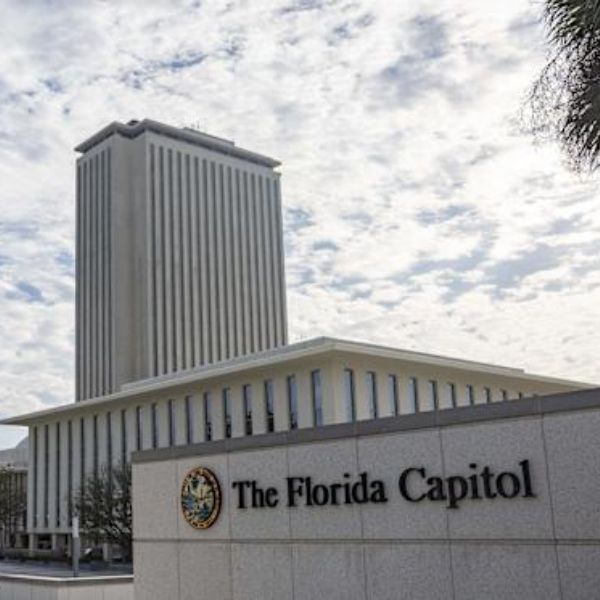
Even though Florida’s legislative session does not officially begin for another week, lawmakers have already filed eight property tax reform proposals. St. Petersburg officials are preparing for the possible impact.
City Council Chair Lissette Hanewicz outlined the process and a potential $83 million revenue loss in a Dec. 10 letter to residents. The next day, she and fellow council members approved Councilmember Mike Harting’s request to conduct a “budget stress test” tied to the proposals.
Harting said the discussion would examine long-term budget effects, identify “core competencies that should remain fiscally intact,” and determine which programs might need to be reduced or eliminated if property tax revenue declines. Officials, he said, would “have to make some choices” if the changes move forward.
“I think it’s prudent at this point for us to at least talk about it,” Harting said.
Several council members supported the request. Councilmember Richie Floyd noted that even if state leaders “say a bunch of things and do nothing,” the stress test would still help inform residents.
Hanewicz warned that many residents “do not understand the huge impact” a reduction in property taxes would have on their daily lives and city services. She stressed the importance of addressing the issue early.
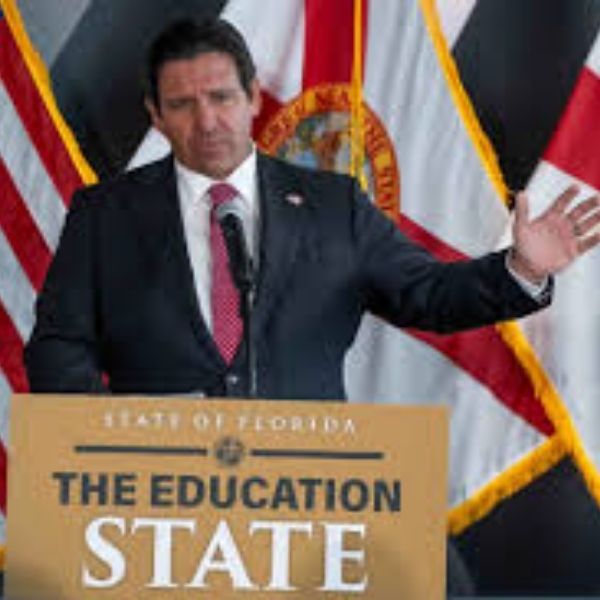
Gov. Ron DeSantis has pushed to reduce or eliminate property taxes, especially for homesteaded properties used as primary residences. As of July 2024, 58% of St. Petersburg’s 107,988 homes fall into that category.
Homesteaded properties already receive tax exemptions and limits on annual increases in assessed value and tax bills.
“On the surface, it sounds appealing,” Hanewicz wrote. “Who wouldn’t like a lower tax bill? But think about it. Without property taxes, how do we continue to fund essential services …?”
She explained that 97.5% of the city’s property tax revenue funds police and fire services, covering 91.6% of public safety costs after excluding required contributions to three community redevelopment areas. The city’s general fund pays the remaining 8.4% and also supports parks, roads, libraries, and social services.
“When we need our first responders, we need them. Period,” Hanewicz wrote.
She emphasized the need for reliable, stable funding that allows the city to plan for future financial strain.
Mayor Ken Welch’s administration estimates St. Petersburg would lose $83 million annually if all homesteaded properties became tax-exempt—money that currently supports police and fire departments.
While current proposals would prevent cities from cutting law enforcement funding and would exempt school-related property taxes, those protections would not extend to fire rescue or other emergency services such as 911 dispatchers and EMTs.
“There is no plan for how this lost revenue will be offset,” Hanewicz wrote.
She also pointed to the state’s Long-range Financial Outlook released in September 2025, which projects a $1.5 billion deficit in Fiscal Year 2027–28, growing to $6.6 billion the following year.
“Any proposal to reduce or eliminate property taxes will involve a cost,” Hanewicz wrote. “I don’t want to see slower emergency response times, deferred maintenance, fewer services, or a diminished sense of safety in our community.”
For reforms to take effect, lawmakers must first approve a joint resolution with a three-fifths vote in both chambers. Although Republicans hold supermajorities and many expect passage, voters would still need to approve a constitutional amendment by at least 60% in November.
Welch recently said he plans to ask voters to approve a new property tax to support a general obligation bond for $600 million in stormwater and water infrastructure projects.
“This is why it’s so important to stay informed and ask questions,” Hanewicz wrote. “If a proposed amendment succeeds, we’d need new revenue sources to fund essential services. You get what you pay for—especially when the ‘math isn’t mathing.’”







Leave a Reply