

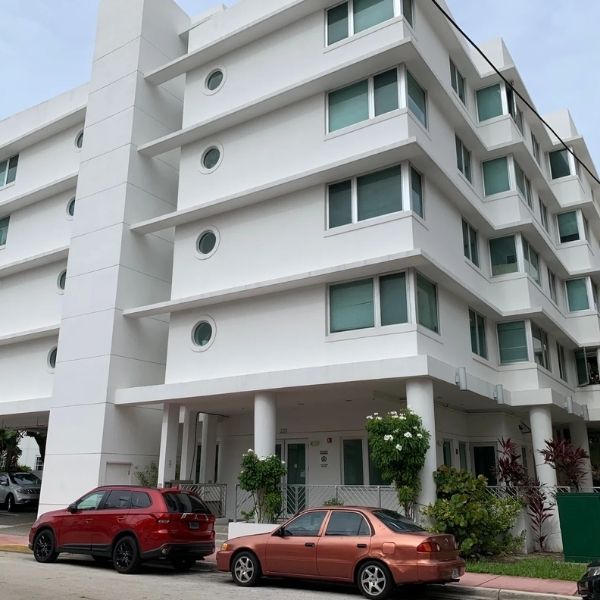
Months after South Florida endured a record-breaking summer filled with relentless heat advisories, high energy bills, and unbearable indoor temperatures, new research shows a clear reality: for people living in old, under-resourced affordable housing, extreme heat is more than uncomfortable — it’s dangerous.
“Extreme heat is the deadliest climate impact and is colliding with the nation’s long-standing shortage in safe, affordable housing for people with the lowest incomes,” said Zoe Middleton, co-author of the Union of Concerned Scientists’ “Colliding Crises” report and associate director for climate resilience.
Across Miami and the country, that crisis is unfolding inside aging, poorly insulated apartments where renters struggle to stay cool. Ashon Nesbitt, CEO of the Florida Housing Coalition, said the connection is obvious.
“When you combine an aging housing stock with rising temperatures and higher energy costs, it’s clear we have to address energy efficiency and resilience together, especially for low- and moderate-income households,” Nesbitt said.
The UCS report reviewed nearly 8 million homes across several affordable housing programs, using National Weather Service heat alerts during “Danger Season” from May to October 2024. Most residents saw at least seven days of heat alerts; nearly half faced 21 days or more.
Florida ranked among the states with the most affordable units exposed to at least a week of heat alerts, alongside Texas, New York, California, and Ohio. Middleton said the state stands out because temperatures are already high and still rising.
“The extreme heat is growing… but not an increase in investment to manage that temperature, particularly in a place like Miami, where the rent is really high,” she said. “That vulnerability of needing to run your AC on top of paying your rent makes it pop in terms of people having to make really difficult choices.”
The analysis also showed that people of color face disproportionate heat risks. Households headed by a person of color make up about half of public and project-based units exposed to at least a week of alerts and two-thirds of those facing three weeks or more. Florida was among the states with the highest percentages in this category.
For many Miami-Dade residents, heat stress is a daily struggle. This past summer, the City of Miami partnered with local groups to install heat sensors in about 70 homes to track indoor and outdoor temperatures. Results are pending.
Christopher Rice, who lives in an older building and relies on a window unit, said his AC simply can’t keep up.
“I’m in a one-bedroom… These ACs are not really doing the thing,” he said. “The bedroom is the one that’s a little warm… I have to get a fan, and then I really can’t take the fan because it hurts my bones.”
The financial strain adds to the problem.
“My bills do go up because I have to constantly burn my AC,” he said. “It’s hard when you’re living on a fixed income and then you have your light bill running you almost to $200 a month.”
Nationally, one in four households faces “energy insecurity,” meaning they can’t afford utilities or must keep homes at unsafe temperatures. In Miami, where “feels-like” temperatures topped 110°F this summer, advocates say poorly insulated units become “heat traps.”
Camilo Mejía of Catalyst Miami said equity plays a clear role in who faces the greatest risks. Many residents involved in the heat sensor project were construction or nursery workers or tenants in older buildings with no resources to fix insulation or seal windows.
Middleton explained why older housing becomes so dangerous.
“A lot of the affordable housing in this country and in Florida is older, it’s not weatherized, it’s hard for it to hold cooling,” she said. And when most income goes to rent, “it’s really hard to manage increasingly extreme temperatures through air conditioning.”
Older adults, children, and residents with disabilities or chronic health conditions — who struggle to regulate body temperature — are especially vulnerable.
Nesbitt said new affordable housing is important, but existing aging units must receive major upgrades.
“We do now have an aging housing stock in our state that does need investment,” he said. “Low- to moderate-income households… have a very high energy burden because the housing is older.”
He noted that “affordability” must also include utilities, insurance, and location — all tied to climate risk.
Some counties, including Marion County, have partnered with utilities to add energy efficiency to rehab efforts. Nesbitt said this model could make a major impact statewide. He also supports adaptive reuse, converting vacant retail buildings into affordable units.
Florida has added green-building and resilience standards to many state programs, but Nesbitt said these requirements must grow stronger, especially for rehab projects.
“As policymakers, we have to think about this holistically,” he said. “In the housing space, we have to bring in the best practices from resilience and energy efficiency and work that into our programs.”
Middleton said the tools exist; what’s missing is long-term commitment.
“It’s not impossible to keep people safer from extreme heat,” she said. “It’s really a matter of political will, and the money to make something different.”
This article has been carefully fact-checked by our editorial team to ensure accuracy and eliminate any misleading information. We are committed to maintaining the highest standards of integrity in our content.










Leave a Reply