

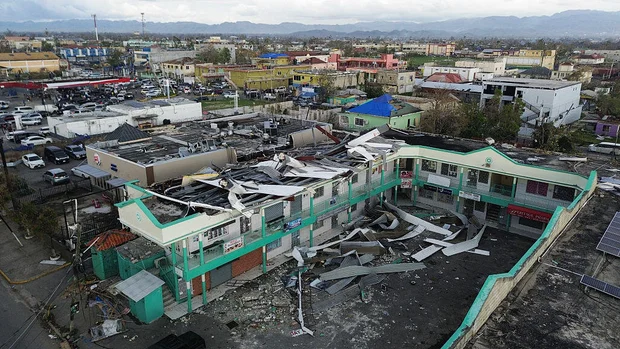
Relief crews and aid organizations spread out across Jamaica on Saturday to deliver food, water, and essential supplies to communities still cut off four days after Hurricane Melissa hit the island.
Melissa, one of the strongest Atlantic hurricanes to hit land, has been blamed for at least 19 deaths in Jamaica, 31 in Haiti, and one in the Dominican Republic. The Category 5 hurricane struck southwest Jamaica on Tuesday with maximum winds of 185 mph.
Communication, Water Supply Severely Hampered
Health Minister Christopher Tufton acknowledged that the death toll could rise as many areas remain unreachable, but said it would be premature to speculate. Fewer than half of Jamaicans currently have communication access, and nearly 400 water systems are offline.
To support response efforts, the U.S. Army deployed three CH-47 Chinook helicopters to Jamaica on Friday, with five more expected. According to AFP, Jamaican officials announced plans to set up several field hospitals, especially in western regions where health facilities suffered heavy damage.
“These mobile hospitals will be fully equipped, including operating rooms and diagnostic equipment, and staffed to support local teams,” Tufton said, adding that they should be operational within a week.
Communities Desperate for Aid
In Montego Bay, crowds formed as residents waited for food, water, and cash assistance. Many stranded American tourists were evacuated with help from the Florida-based Gray Bull Rescue Foundation, which returned 341 U.S. citizens from damaged resorts.
Supplies have begun reaching St. Elizabeth and Westmoreland, where roads were previously blocked by downed trees and concrete poles. However, some residents have resorted to collecting muddy river water, drinking coconut water, or roasting breadfruit to survive.
In coastal Westmoreland, debris—mangled roofing, shattered wood, and damaged furniture—lined the roads and shoreline.
Social Security Minister Pearnel Charles Jr. joined emergency convoys delivering ready-to-eat meals, water, blankets, tarps, medicine, and other necessities.
“The priority now is to get help to those who need it,” he said while heading to Black River, which Prime Minister Andrew Holness has declared the hurricane’s “ground zero” and in need of full reconstruction.
The Jamaica Defense Force has set up a satellite relief center at the Luana community center, distributing aid packages to residents who have gone days without basic supplies.
“Everyone is homeless right now,” said Rosemarie Gayle, clutching a package containing essentials like rice, beans, powdered milk and cooking oil. “Thank you, thank you. I can’t say thank you enough.”
Widespread Devastation and Ongoing Challenges
Hurricane Melissa decimated infrastructure—snapping power lines, flattening buildings, destroying crops, and disrupting access to food and clean water. Satellite images showed the dramatic transformation of towns like White House and Black River, now reduced to mud, debris, and rubble.
More than 60% of the island remains without electricity. Helicopters continue air-dropping food to isolated areas as residents walk miles to check on loved ones or secure supplies.
“People are in shock and they’re waiting on relief,” said Mike Bassett, World Vision’s director of domestic humanitarian and emergency efforts, reporting from Santa Cruz in St. Elizabeth.
“The biggest needs are clean water, tarps, canned proteins, hygiene products, and cleaning supplies.”
The U.N. World Food Program received 2,000 emergency food boxes from Barbados to feed up to 6,000 people for one week in the hardest-hit communities.
Tufton also warned about rising health risks: mosquito outbreaks, waterborne diseases, and food poisoning. “Please discard spoiled food,” he urged.
International Support and Recovery Funding
A U.S. disaster response team is already in Jamaica after being activated by Secretary of State Marco Rubio.
“The United States stands with Jamaica and is prepared to deliver emergency relief supplies,” the U.S. Embassy said.
In Westmoreland’s Watercress community, residents like 75-year-old Dorothy Headley cooked meals over open wood fires amid the ruins of their homes.
Environment Minister Matthew Samuda posted on X, urgently seeking tarpaulins after roofs were torn off homes in western Jamaica. Users responded by sharing locations where supplies were available.
In Falmouth, a historic fishing town on the north coast, flooding and wind damage destroyed buildings and disrupted hospital operations.
“Our immediate priority is restoring electricity, telecommunications, and stabilizing essential services at Falmouth Hospital,” Prime Minister Holness wrote on X. He pledged that Jamaica would rebuild “stronger and wiser.”
To assist with financial recovery, the Caribbean Catastrophe Risk Insurance Facility announced a record $70.8 million payout to Jamaica. The funds, expected within 14 days, are part of a regional disaster insurance pool.
Finance Minister Fayval Williams said this insurance payout is only one element of Jamaica’s financial strategy, along with a contingency fund, national disaster reserves, and a catastrophe bond. Damage assessments remain ongoing.






Leave a Reply