

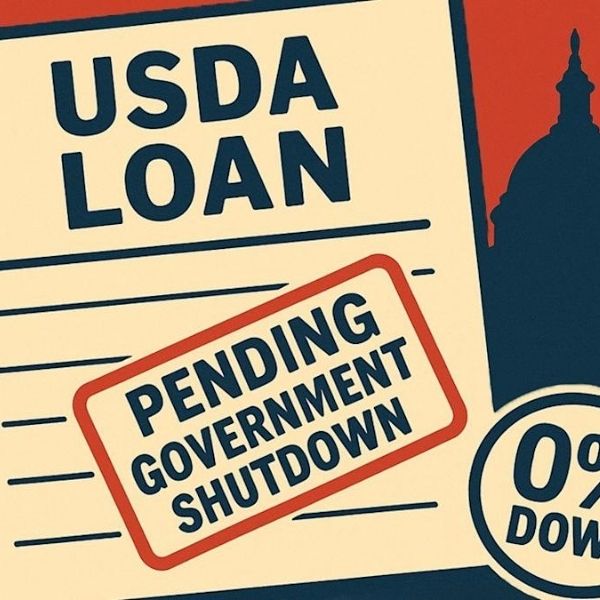
Broker Frustrated as Homebuyers Wait for Government to Reopen
The ongoing government shutdown, with no clear end in sight, is taking a toll on the mortgage industry.
A recent report estimated that $1.6 billion in loan closings are being delayed because lenders can’t secure flood insurance. While most loans not requiring flood coverage continue as usual, USDA-backed mortgages — a vital option for many rural buyers — are completely frozen.
These USDA loans, which offer no-down-payment financing and appeal to lower- and middle-income borrowers, can’t move forward until the agency reopens.
Mississippi mortgage broker LeeCoye “LC” Parker of C2 Financial said the freeze has brought his business to a halt.
“What we’re seeing with the government shutdown is the inability to fund USDA loans,” Parker explained. “USDA loans are the only product that requires agency approval. With VA or FHA loans, the bank’s underwriter can finalize them — but USDA loans are stuck because the agency is closed.”
Impact on Rural Families and First-Time Buyers
Parker said the freeze is hitting rural and first-time buyers especially hard.
“That’s hurting a lot of rural, first-time homebuyers,” he said. “These young families, we don’t have an answer for them. I’ve probably got at least six deals tied up because the USDA isn’t open.”
Despite the delays, Parker refuses to substitute another loan type because of USDA’s advantages.
“If I can go USDA, I am going USDA,” he said. “Next to a VA loan, it’s the best product out there — 100% financing and a competitive rate.”
Still, qualifying for a USDA loan has become more difficult due to higher interest rates, insurance premiums, and home prices, all of which strain borrowers’ debt-to-income (DTI) ratios.
“Rates were around 7% recently,” Parker said. “Combine that with high insurance and rising prices, and meeting the DTI for USDA loans has been tough.”
Stricter Rules Ahead
Even when the government reopens, challenges will remain. The USDA plans to tighten qualification rules in November, making it harder for many borrowers to qualify.
“Starting in early November, they’re lowering the front-end DTI ratio to 29%,” Parker said. “To go above that, borrowers need at least a 680 credit score and strong compensating factors. About 70% of my business is USDA, so this hits hard.”
While Parker acknowledges the USDA’s need for caution with 100% financing loans, he believes the changes hurt working families most.
“I’m sure it’s data-driven, but it’s not doing the average American family any favors,” he said. “If the house appraises for more than the purchase price, you can roll up to 5% of closing costs into the loan — that’s a huge help. Tightening the ratios just makes homeownership harder.”
With first-time homebuyer ages rising and more Americans opting to rent, Parker worries that stricter requirements will only widen the gap.
“We have to look at what the American dream really means — buying a home,” he said. “The government should be helping, not hindering. Tightening USDA qualifications will only make home affordability worse.”
This article has been carefully fact-checked by our editorial team to ensure accuracy and eliminate any misleading information. We are committed to maintaining the highest standards of integrity in our content.
















Leave a Reply