

On a regular weekday morning in September, Angela De Borja helped her daughter Cecilia with the usual routine: get her six grandchildren ready, pack their bags, and drive them to school in Homestead.
But everything changed the moment they dropped the kids off.
An unmarked white van pulled up. Immigration agents stepped out and surrounded Cecilia, who was born in Guatemala and didn’t have legal status. De Borja watched in shock, unable to understand what was happening.
“We didn’t know why,” she said. “Or how they knew where we were.”
Within minutes, her daughter was gone, taken to an Immigration and Customs Enforcement detention facility. De Borja, who is married to an American citizen, stood alone in the parking lot, still hearing her grandchildren’s voices in her head.
What followed was a blur of fear and uncertainty. ICE transferred Cecilia between facilities across the state without warning. “They took her from one place to another,” De Borja recalled. When the deportation order finally came, Cecilia was sent back to a country she hadn’t seen in more than a decade, forced into a life she no longer recognized.
That day, De Borja, 43, became the full-time guardian of Cecilia’s six young children.
She never expected to raise another generation, but with their mother deported, the children had no one else in the United States. All six were born here.
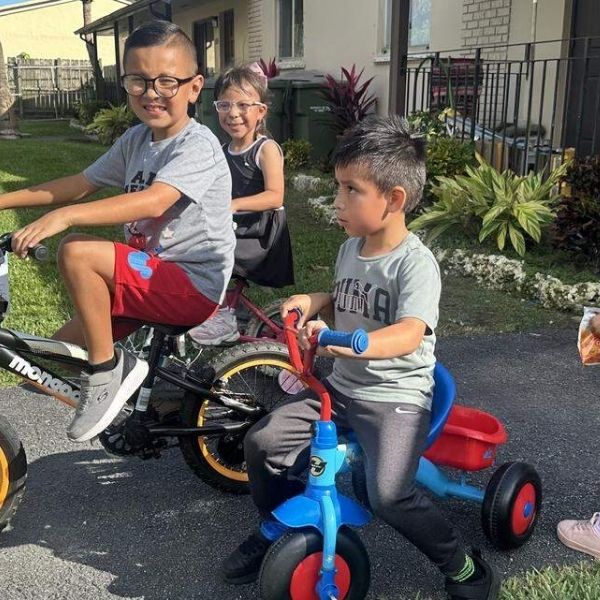
“I give them all my love. I help them with everything,” she said. Her grandchildren — Dylan, Genesis, Liam, Jayden, Angie, and baby Nanyell — range from 1 to 8 years old. Two of her grandsons have developmental delays, which means therapy appointments, specialists, and constant attention.
Recognizing these challenges, the Arc of South Florida, a nonprofit that supports people with intellectual and developmental disabilities, nominated the family for help from the Miami Herald/el Nuevo Herald Wish Book program.
At home, De Borja often sees the children standing at the front window, watching the street and asking whether their mother might return that day. “The hardest moment is when they cry ‘mom, mom, mom,’ and I don’t know how to comfort them,” she said.
De Borja knows that feeling well. Years ago, she left Guatemala hoping her children would grow up in a place where food wouldn’t run out and opportunity wasn’t out of reach. “In Guatemala, it’s very hard … it’s hard to survive,” she said. She carried that hope with her to the United States. Now, she wants her grandchildren to have the life she never had.
Today, De Borja works long days in nurseries and farms in Homestead. Some shifts last 12 hours, beginning before sunrise and ending after sunset. When she gets home, six children need meals, homework help, baths, comfort, and stability. “They are my motivation,” she said.
Her husband, who also works in the fields, helps with the kids even though they’re not his grandchildren. The financial strain is overwhelming. Raising six young children requires diapers, clothing, formula, wipes, school supplies, and more. “The diapers are so expensive,” she said. She dreams of stability and enough support to keep the children in the care they need.
Despite everything, she still finds moments of hope: a new word learned in therapy, an afternoon sharing ice cream, or siblings cheering each other on as they learn to ride a bicycle.
This holiday season, De Borja hopes the community can ease some of the burden. Wish Book assistance with clothing, diapers, basic household items, and educational toys would make an immediate difference for six children who have already faced more than most.
For De Borja, a grandmother holding two generations together, even a small act of support would remind her she doesn’t have to carry everything alone.
HOW TO HELP
To support this Wish Book nominee and more than 100 others in need:
▪ Donate using the coupon in the newspaper or make a secure online donation at www.MiamiHerald.com/wishbook
▪ For more details, call 305-376-2906 or email [email protected]
▪ The most requested items include laptops, tablets for school, furniture, and accessible vans
This article has been carefully fact-checked by our editorial team to ensure accuracy and eliminate any misleading information. We are committed to maintaining the highest standards of integrity in our content.










Leave a Reply